
Shenzhen Shorts — Dongshan as the Last Pearl
As the taxi pulled over to Dongshan Village, I sensed that it was a provincial part of Nanao at which we would be staying. The Mello Hotel is located in the newish touristy area of the Dongshan Village.
Meaning “the eastern mountain,” the Dongshan Village has a history of settlement that dates back to the late Ming dynasty. For a very long time, the Nanao peninsula came under the administrative jurisdiction of nearby Dapeng. Dapeng is namely the south-eastern-most region of Shenzhen. At its northern end, Huizhou, as part of the Guangdong Province, begins.
Author Lv Shili spent three years interviewing the villagers of Dongshan about their heritage, their lives and their aspirations. The book The Last “Pearl”— Report from Dongshan Village weaves together the themes that continue to concern the people of Dongshan Village as the back quarter fishing town of Dapeng moves forward from the former industry of pearl harvest.
A Time of Glory – The Pearl Harvest of Dongshan
In this area of Shenzhen, the pearl industry goes as far back as 1,000 years ago as recorded in the historical scrolls. The part of history that has pan-generational significance in the lives of the current villagers was the pearl rearing and harvesting fields that began in the 1960s in New China.
The pearl farms were state owned, but often times requiring the help of the Dongshan villagers. This enterprise reached its heyday during the 1980s, when sizeable production facilities arose to meet the need for secondary pearl products, such as pearl powder for skincare, jewelry and other pearl inlaid decorations. The pearl industry was so developed that tourism features, such as shops and food and dining, were also introduced during this time. One could only imagine the glory of such business for an otherwise agrarian community.
These pearls, being from Nanao, acquired the beautiful name nanzhu, meaning the “southern pearl.”
For decades, the people of Dongshan relied on the pearl farming opportunities as their first order of livelihood. The next option for them would be fishing and agriculture. The pearl industry was slowly phased out during the 1990s or so. Since then, the villagers have struggled to find the opportunities that could emulate the boom that followed the pearl industry. As of now, it is apparent that Nanao’s aspiration for tourism would benefit them.
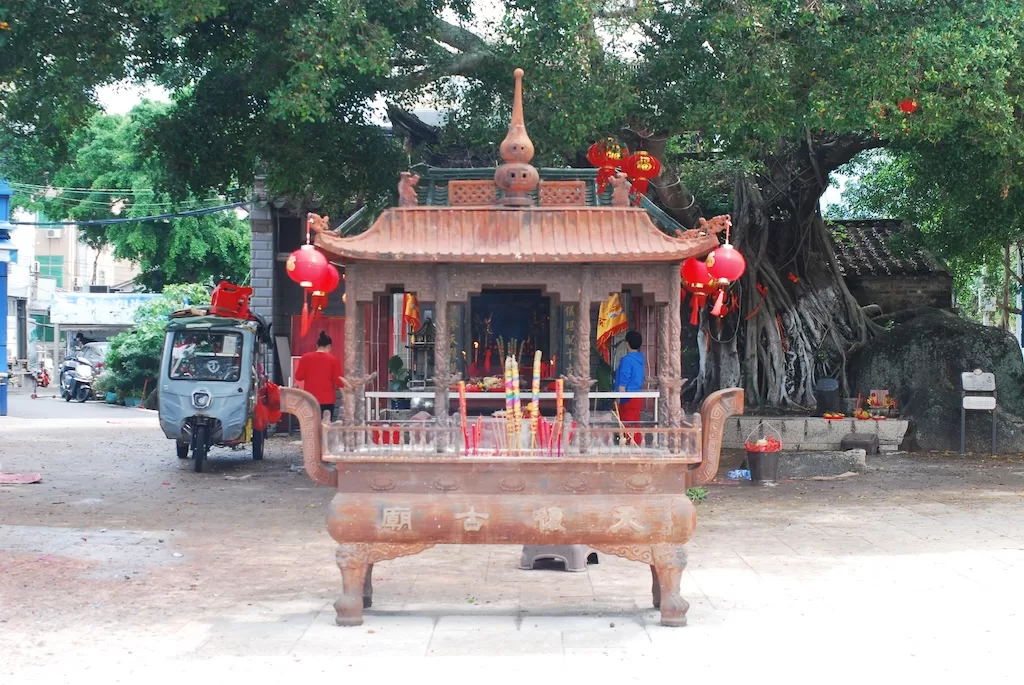
The Ancient Tin Hau Temple in Dongshan Village
In all Cantonese communities of China, Tin Hau, as the Goddess of the Sea (also called Mazu), is worshipped in the coastal areas. It is no different for the people of Dongshan. The recorded history of this Tin Hau Temple of Dongshan suggests that it has had more than 500 years of history, since the Ming dynasty.
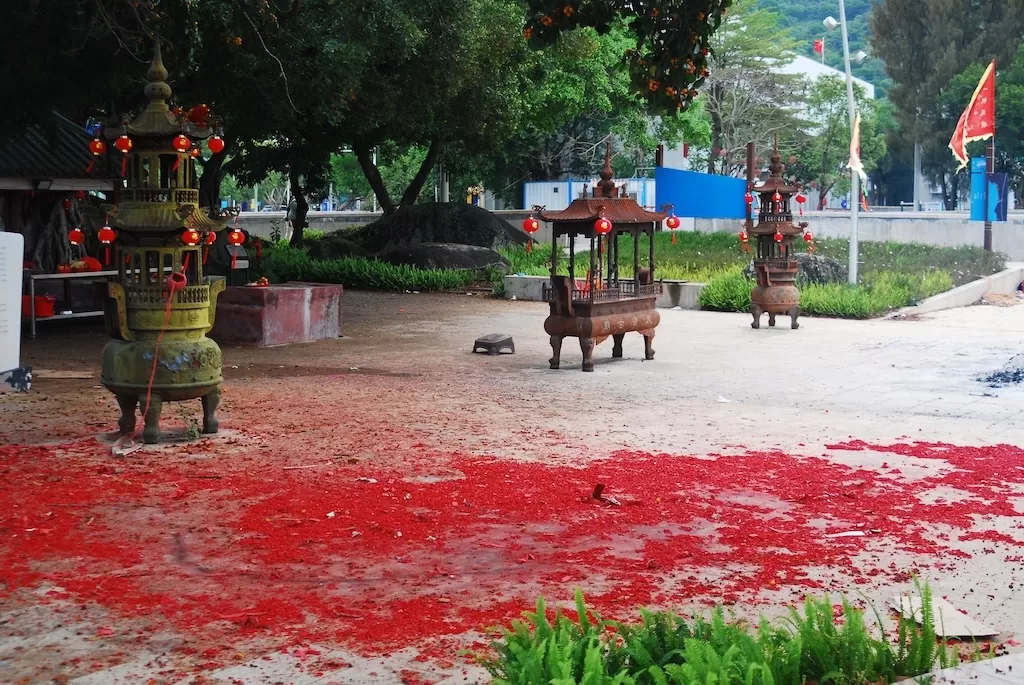
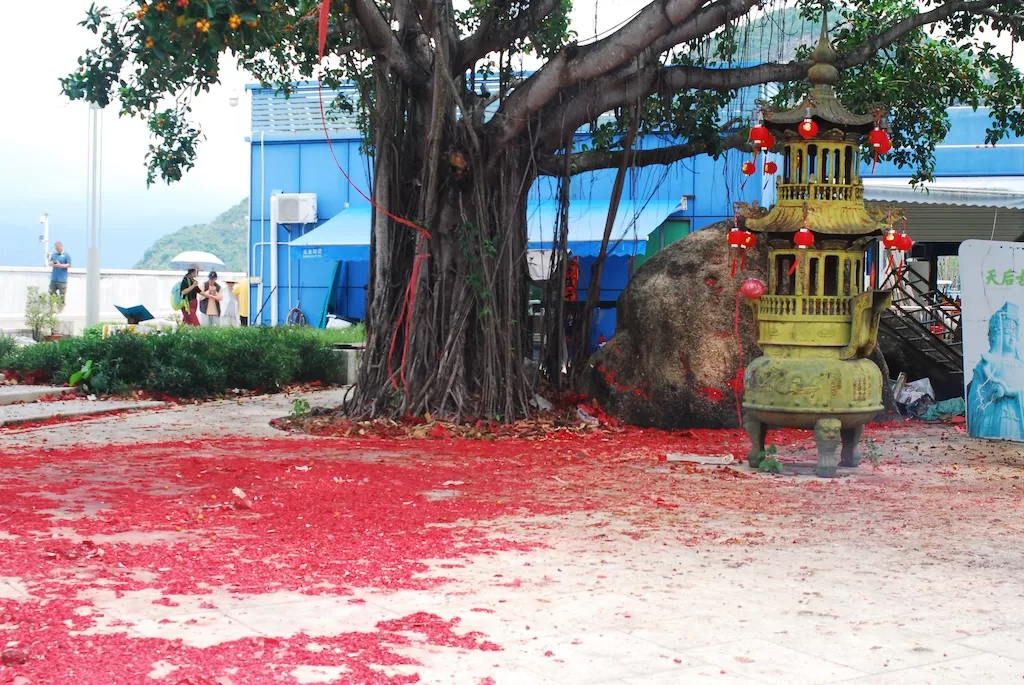
Originally, the temple was built upon two big rock formations that lied in the middle of the sea. The worshippers had to row their boats to visit the temple. Due to the land reclamation efforts in the past few decades, the water level receded, the land area expanded. As such, the Tin Hau Temple now stands within the standard landform in the Dongshan area.
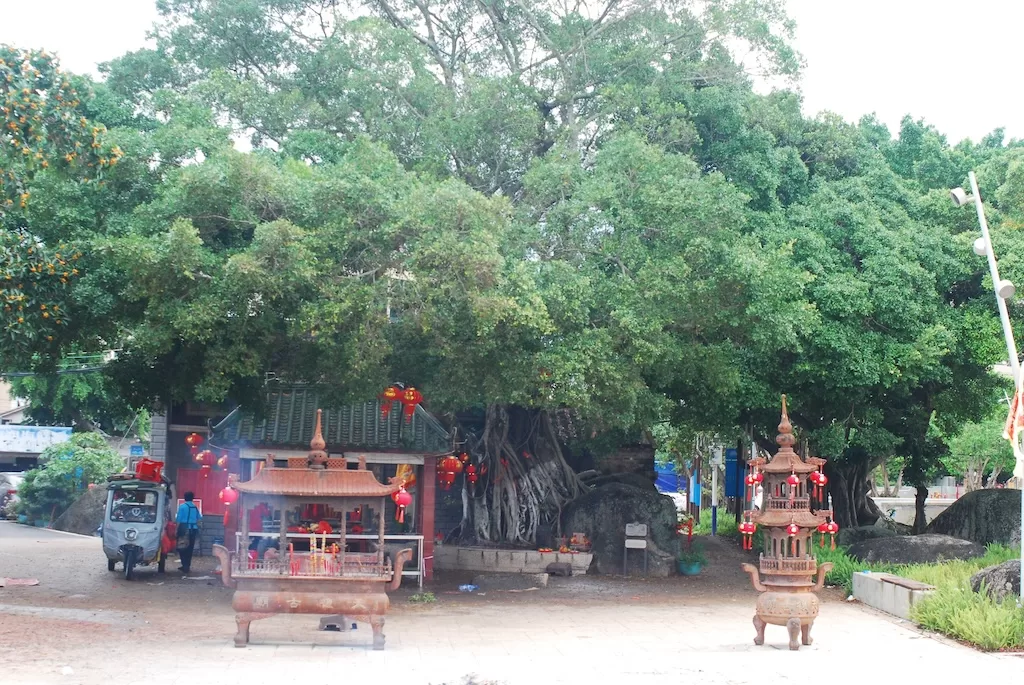
Photo above: You can see the big rock upon which the Tin Hau Temple of Dongshan was built in this photo, right by the large century-old banyan tree that is also very much the temple’s history.
To this day, traditional festivities celebrating the birthday of Tin Hau are held annually, featuring traditional Cantonese opera performances, with joss stick and incense burning at an enormous scale. It is certainly a remarkably festive time of the year.
The Dongshan Pier
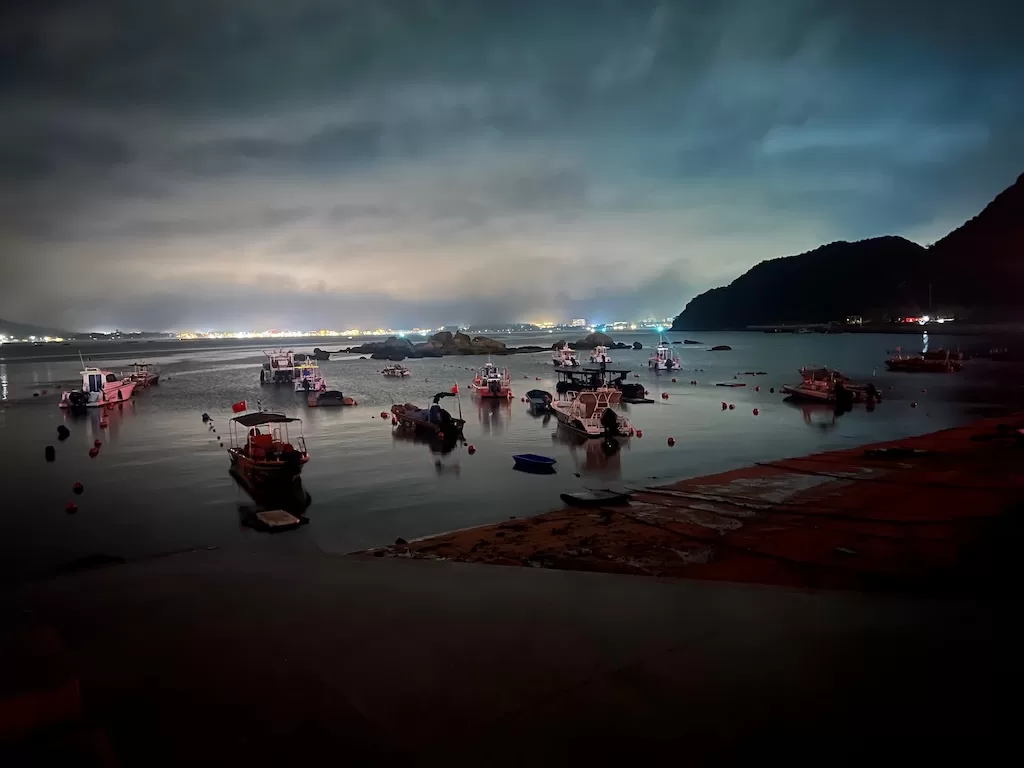
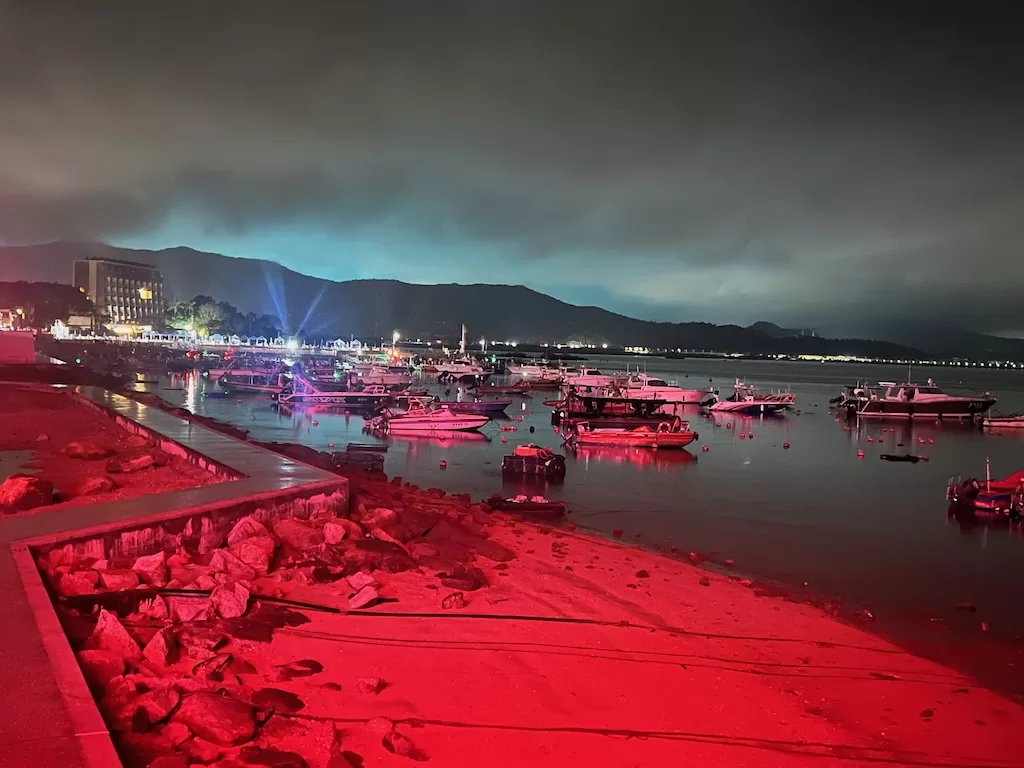
This photograph above shows a surreal view of the Dongshan junks in the evening. The lighting of the pier bestows a sense of unreality. In daytime, the Dongshan Pier does not look an ounce of the beauty that it has at night. The junks are old fishermen boats, certainly workable but nothing close to the beautiful yachts at the YUN Hotel.
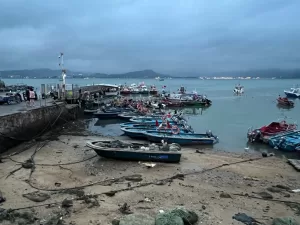
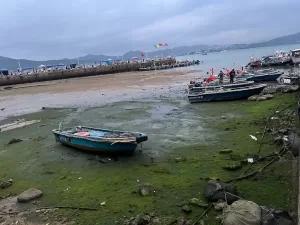
Yet this pier was once the lifeline for the Dongshan Village. Because of its vicinity to the Hong Kong waters in the south, the Dongshan Pier was once a major port for the transport and sale of opium during the 19th century. The British opium merchants docked their fleets here first, then distributed their goods to all other locations. Their demand for food and entertainment resulted in a short-lived era of economic boom at the pier.
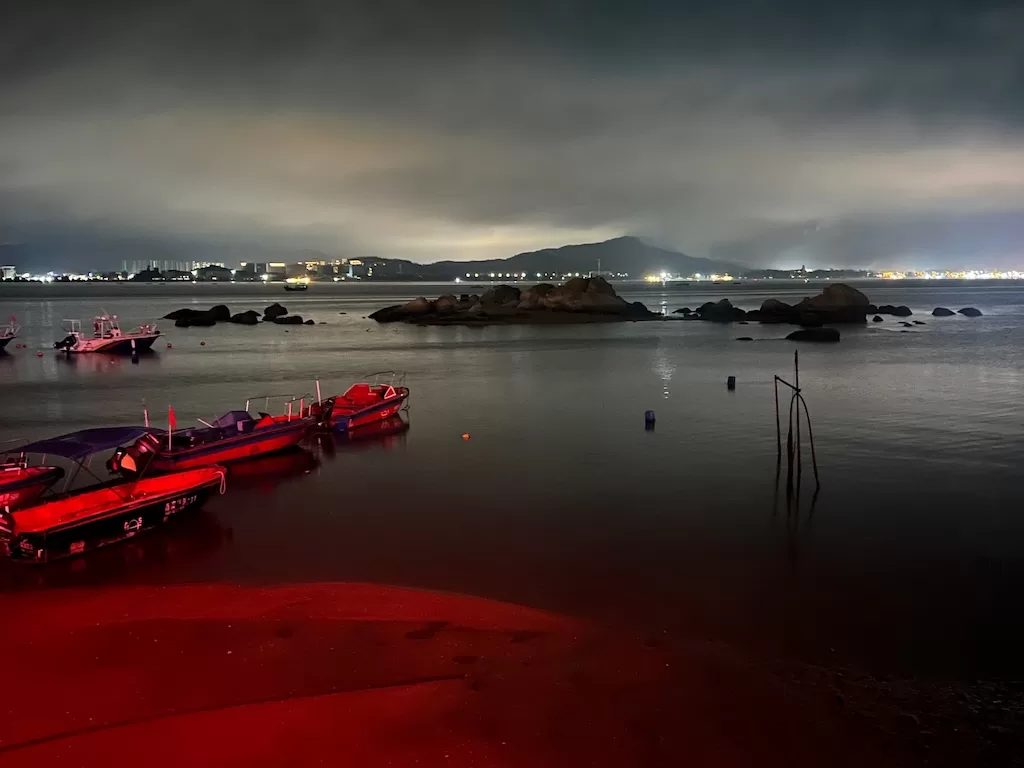
Such was the Dongshan Pier’s last life. When Japan invaded China in the 1930s, its fate would turn and its glory never restored. The Japanese burned down the Dongshan Pier in 1938. Since then, the original population of Dongshan dropped to the lows of just a few big surnames remaining. The current villagers of Dongshan are mostly new arrivals since the establishment of New China.
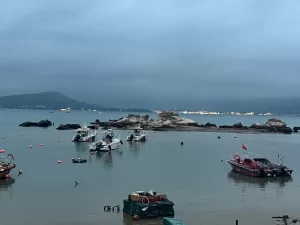
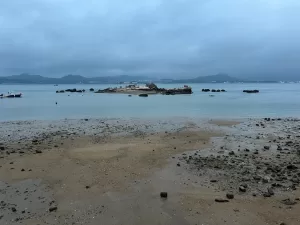
Today, the Dongshan Pier continues to serve a most basic function, as the place where the fishermen go out to sea for their catch. The fishermen of Dongshan sell their goods as soon as they return from sea. In times of typhoon, the Dongshan Pier can provide refuge for about 70-80 boats.
Dongshan Fishermen’s Songs
The Dongshan Fishermen’s Songs are likely the proudest intangible heritage for the people of Dongshan. The lyrics of the fishermen’s songs “cover almost every aspect of the fisher folks’ lives.” It is much of an oral tradition, as generations of illiterate fishermen pass on these songs. But also certainly that a lot of the songs are improvised. There is a fishermen’s songs team in Dongshan now, and most of the singers are mid aged women that come from the fishermen’s heritage. They perform in government sponsored events every now and then. In their standard repertoire are 31 songs featuring fun rendition of their lives at sea.
At the Tin Hau Temple, there is a loudspeaker that runs a sample of the fishermen’s songs on a loop. The songs are sung mostly in the Dapeng and Hakka dialects.
Traditionally, the fishermen communities of China are considered relatively low in the social hierarchy. For a very long period of time, they are not allowed to live on the land at all. Throughout those long years that Dongshan experienced the many turns of fortunes, some fishermen in the community have managed to secure their homes on land. That certainly was a step up for them.
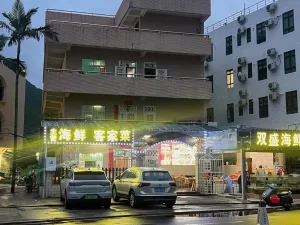
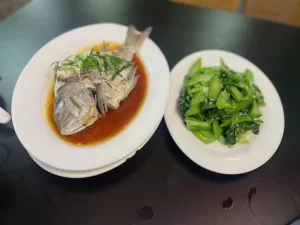
There are many Chinese restaurants that specialize in seafood making in Dongshan, and they serve, quite exclusively, the daily catch of their own fishermen. I happened to have one meal at these local seafood restaurants closed to the Mello Hotel.
Sources
Descriptions on site at the Tin Hau Temple of Dongshan Village.
Lv Shili, Zhou Xiaoxin, The Last “Pearl,” Report from Dongshan Village (2020).