
Historic Macau — The Senate Square
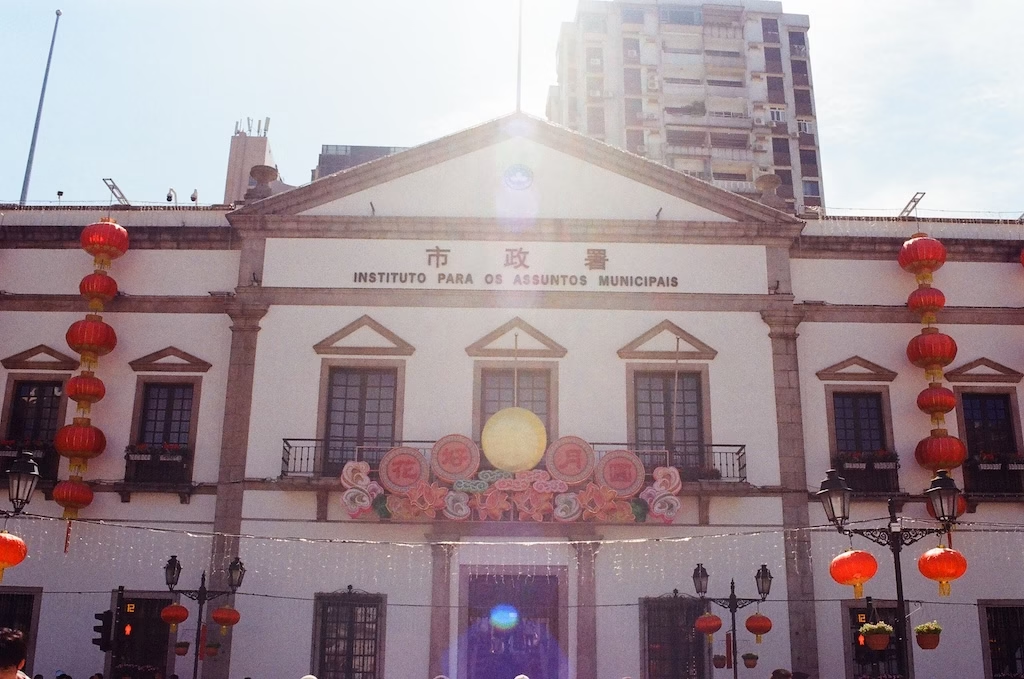
Namely the heart of Macau that drives all pedestrian flows, the Senate Square (Senado Square) is a must-see before one reaches the famous Ruins of Saint Paul’s. In this square, you will come across an innumerable number of historic structures, including the St. Dominic’s Church, the Municipal Administration Office, the Santa Casa Misericordia, the Macau Post Office, amongst others—not to mention the buzzling scene of eateries that serve all kinds of street foods.
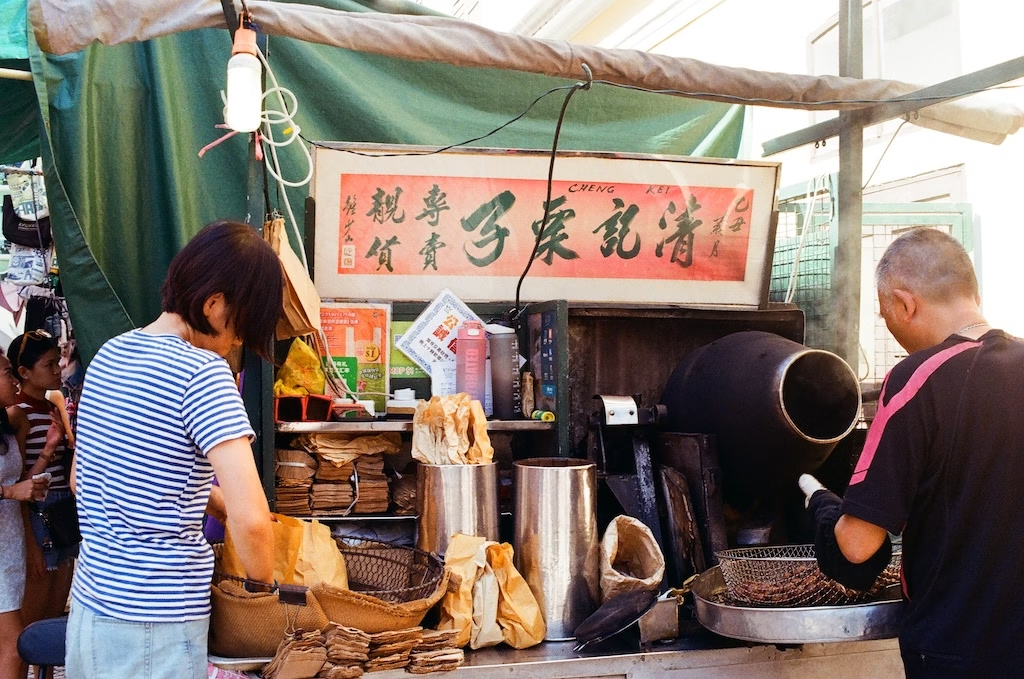
In this entry, I will take you through some of the significant sites at the Senado Square.
Soon after departing from the Sir Robert Ho Tung Library, I made a gentle descent toward the very heart of Macau’s administrative, religious and historical center.
The Senado Square
The Senado Square was named after Leal Senado, The Senate of Macau (below), a meeting place for the Chinese and Portuguese during the 16th to 18th centuries, where the Legal Senado Building stands today. The square was paved in Portuguese pavement and designated pedestrian-only in the early 1990s.
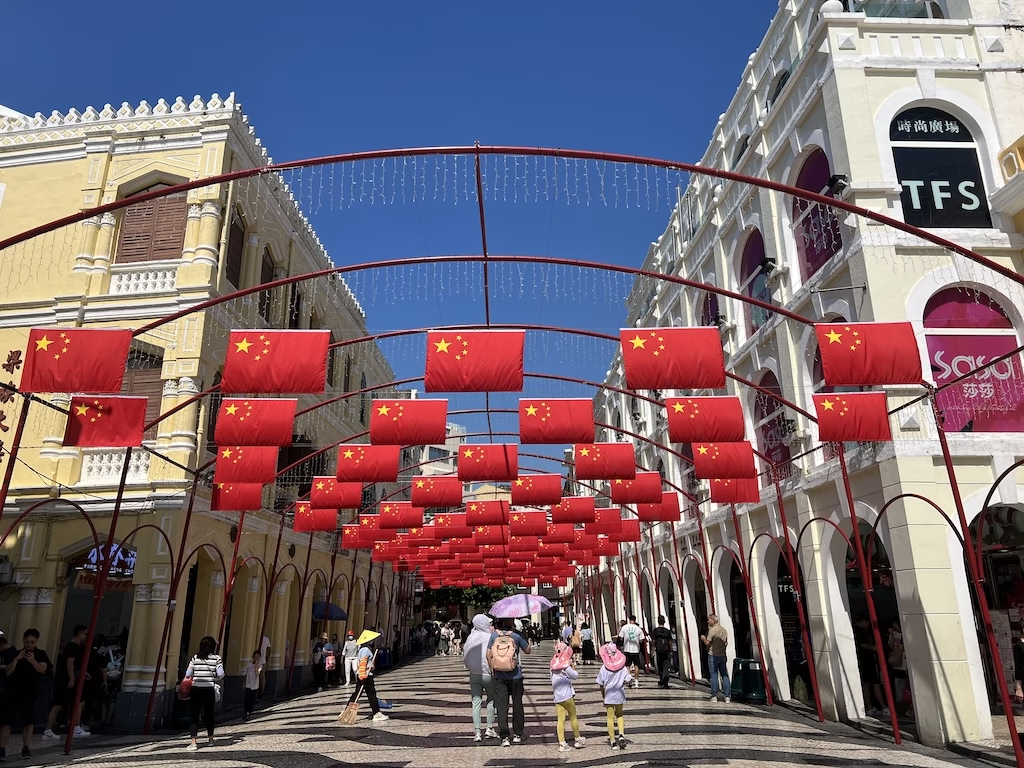
Its cobblestoned ground is familiar even to those that have not been to Macau. That, and along with all other historical buildings surrounding the square, are just about all that remains constant through the flow of time.
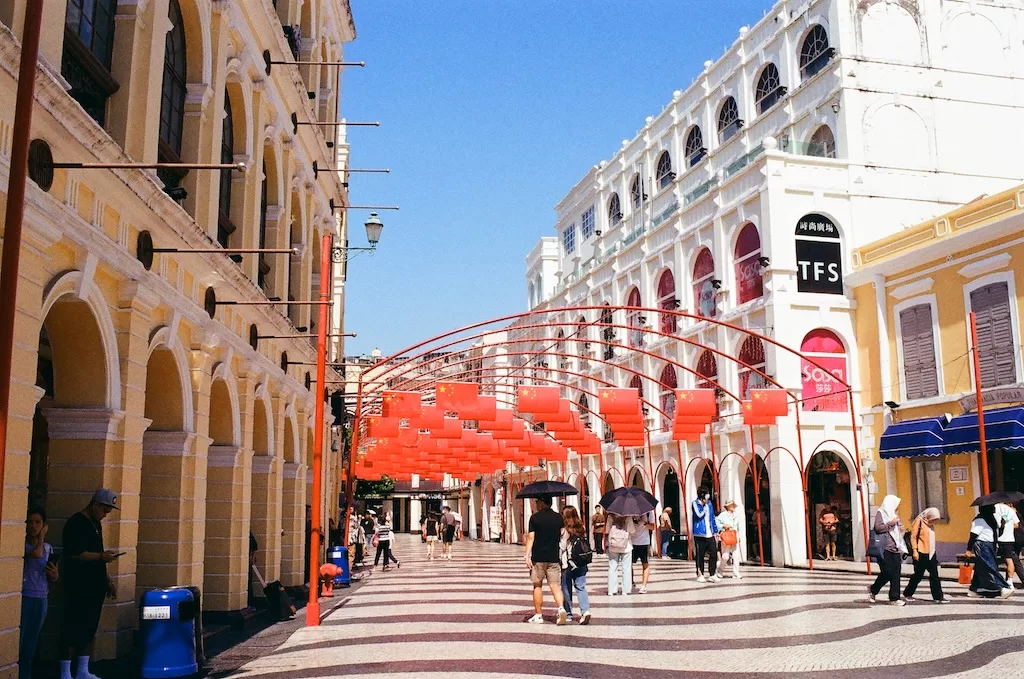
In the thick of Macau’s tourist traffic, the Senado Square dresses itself to the occasion. Because I visited on the October 1 weekend (the National Day of the PRC), the square featured rows and rows of perfectly aligned national flags.
Municipal Administration Office
Formerly the Leal Senado Building, the Municipal Administration Office was built in 1784 as Macau’s first municipal chamber. It has been the seat of Macau’s government administration since.
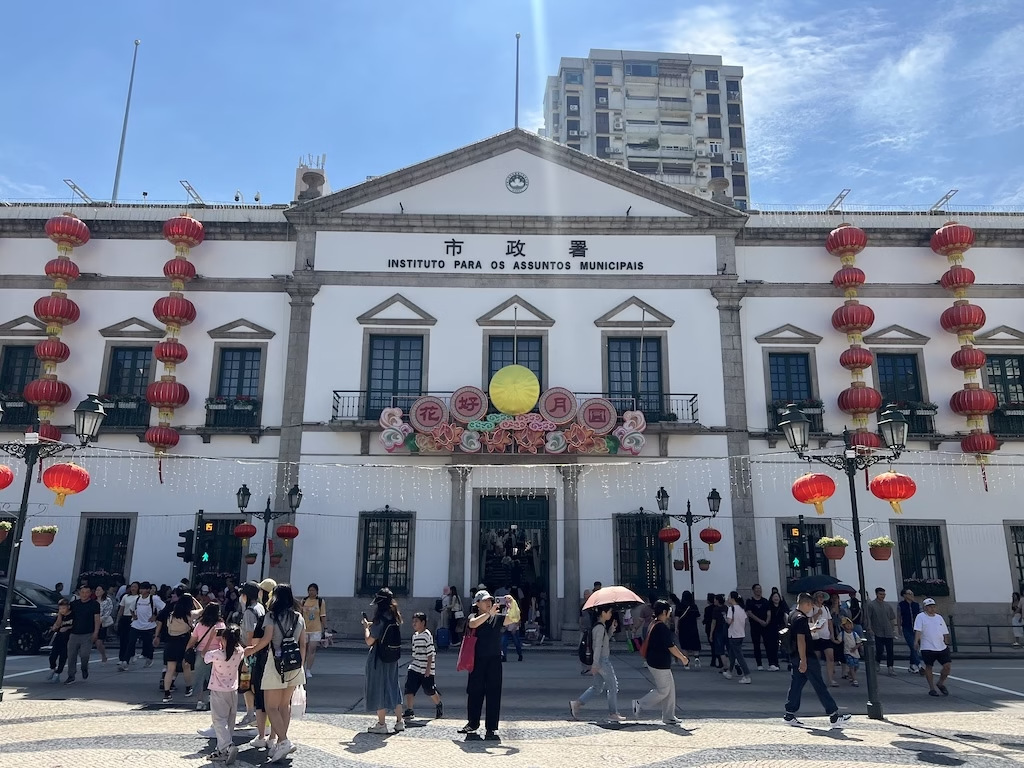
In a previous entry, I have learned that the Portuguese King said this of Macau in the mid-17th century, “Nao ha outra mais leal,” (“City of Our Name of God Macao, There is None More Loyal,”) when the Macanese sent a shipment of guns and money to King Joao IV, congratulating him on the successful revolt against Spanish rule. And “Leal Senado” means “the Loyal Senate,” as the former name of the Municipal Administration Office.
Besides serving the same function as the seat of administration over time, the Municipal Administration Office has also retained its architecture, as its neoclassical front and the main layout are still the original.
The address of the Municipal Administration Building is No. 163 Av. Almeida Ribeiro (San Ma Lo).
The Macau General Post Office
Looking southeast from the Municipal Administration Building, you will see the Macau General Post Office standing, stately and grand in an aged glory. The building has stood here since 1929.
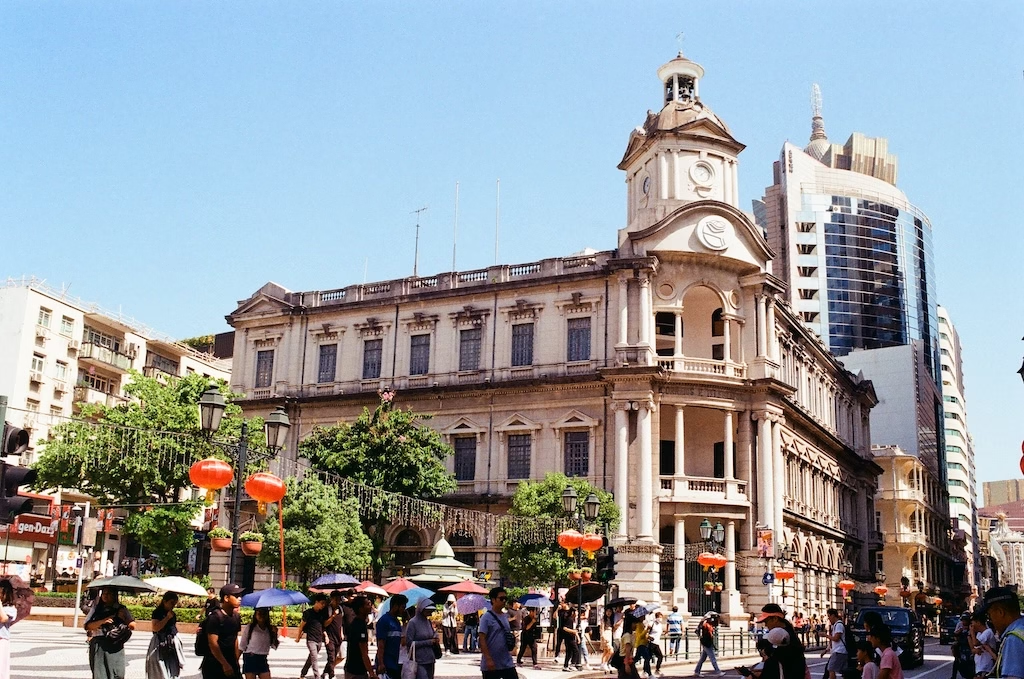
The Bureau of Macao Post came into being in 1884, its first office was at the intersection of Rua de Santa Clara and Rua do Campo. When the permanent site of the Macau General Post Office was established in 1929, it oversaw the centralized work of post, telegraph and telephone. The building is still a post office today.
In terms of architecture, perhaps it is interesting to note that the architect for this building is famous Chinese architect Jose Chan Kun Pui, the first Chinese chief architect, whose creative endeavor is represented in the neoclassical style of the building.
The address of the Macau General Post Office is the intersection of Avenida de Almeida Ribeiro, n.º 126 and Senado Square.
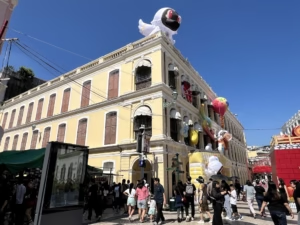
The St. Dominic’s Church
The St. Dominic’s Church, (Largo de São Domingos in Portuguese), was the mission of three Spanish Dominican priests coming all the way from Mexico. They established this church in 1587. In 1929, the church integrated the worship of Our Lady of Fatima into its religious service, based on the miraculous sighting that three shepherd children witnessed in Fatima, Portugal. The church, as an institution in Macau, spread the belief of Our Lady of Fatima to Shaoxing, Timor, the Philippines, Singapore, Malacca and further. On May 13th every year, the St. Dominic’s Church holds a procession in the city.
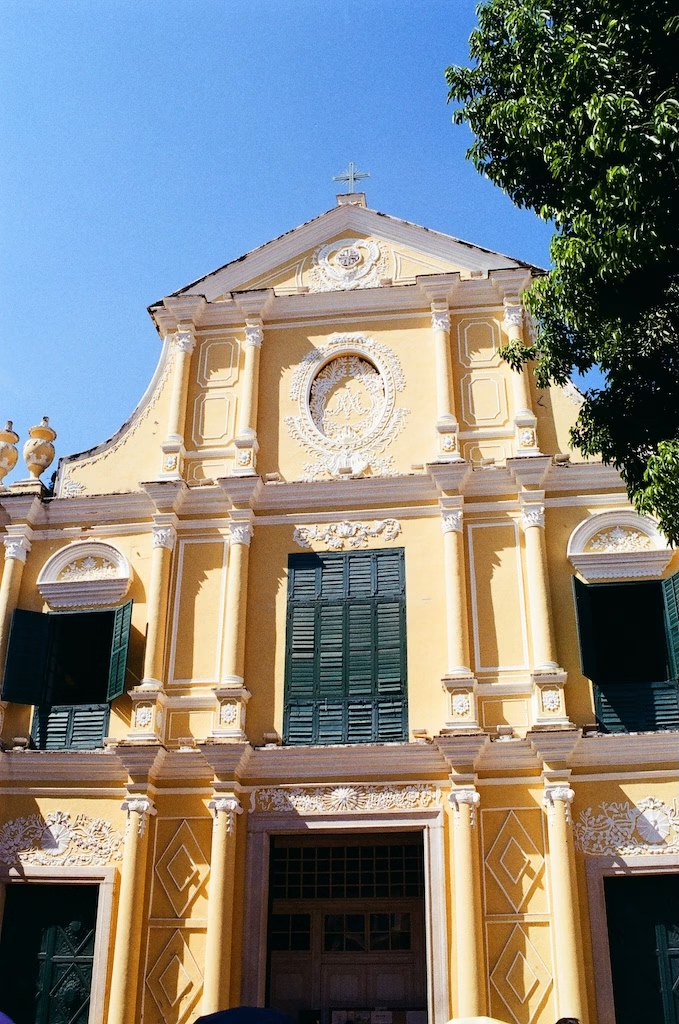
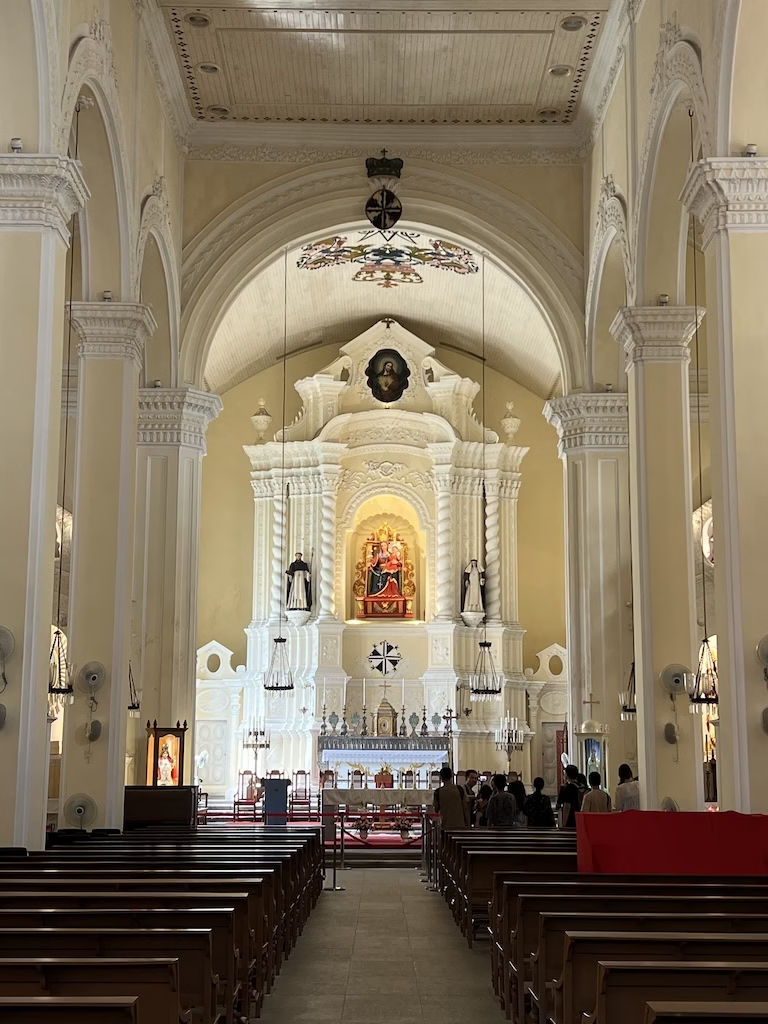
The Church has clear Baroque influences, somewhat reminiscent of the features of the St. Joseph’s Seminary and Church. Because the very original building was built in wood, in Chinese people call it “Pan Cheong Tong,” meaning “wood plank church.” The building has a typical Basilican plan. In its interior, the altar features four Solomonic columns, but they are different from the ones I saw at the St. Joseph’s Church. The windows of the church feature external wooden blinds in green color. The pediment of the Church’s façade shows the insignia of the Dominican Order.
The square in front of the St Dominic’s Church is the St. Dominic’s Square (Largo do São Domingos).
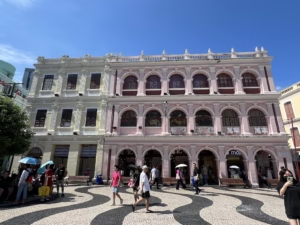
Santa Casa Misericórdia
The Macau Holy House of Mercy, Santa Casa Misericórdia in Portuguese, has a distinct character as an all-white building that exudes a holiness and purity, perhaps in line with its original character as a building for charity and health services.
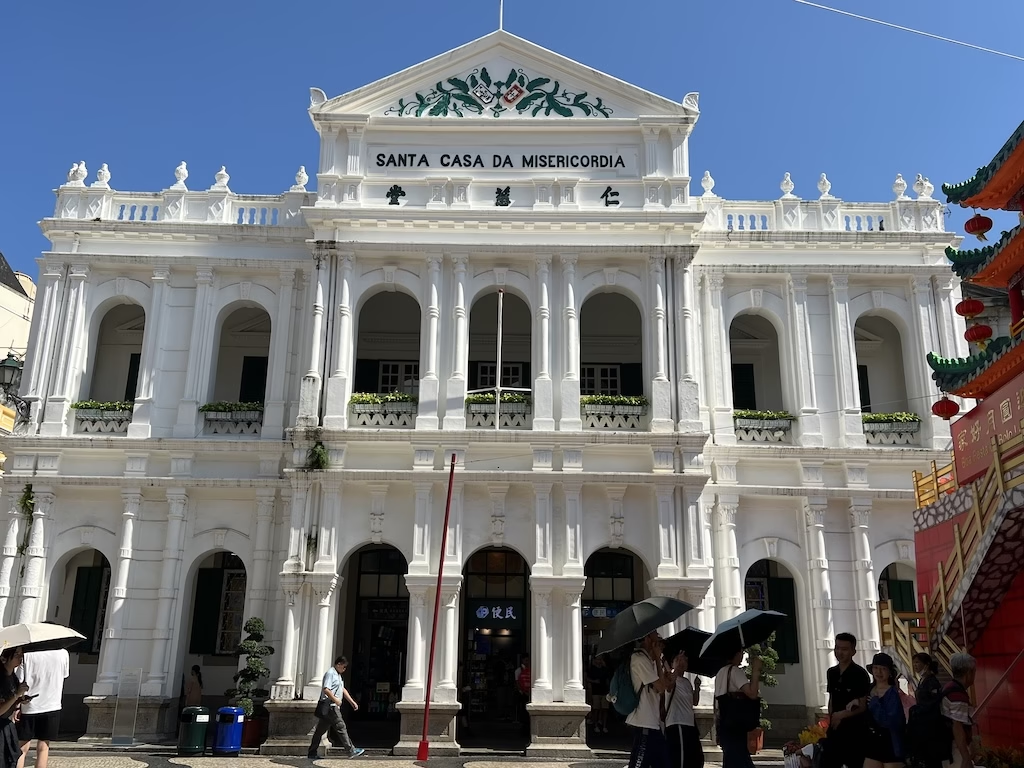
The building was a branch of the Santa Casa da Misericórdia, a Portuguese Christian fraternity with historical roots as far back as 1498. The Macau chapter established its presence in Macau in 1569. Its service began on the orders of the Bishop of Macau, Belchior Carneiro Leitão, who himself was involved in the founding the first Senate of Macau, later in 1583. Over the centuries of its existence, the Holy House of Mercy was a medical clinic, and provided a host of social services in Macau, including a lazar’s asylum (for leprosy). It also served as an orphanage and refuge for the widows of sailors lost at sea.
The Macau Holy House of Mercy takes over the whole chain of its charity efforts. That includes the most critical step of raising funds for the poor and needy. It had once operated a bank, lent money, and promoted a very popular lottery.
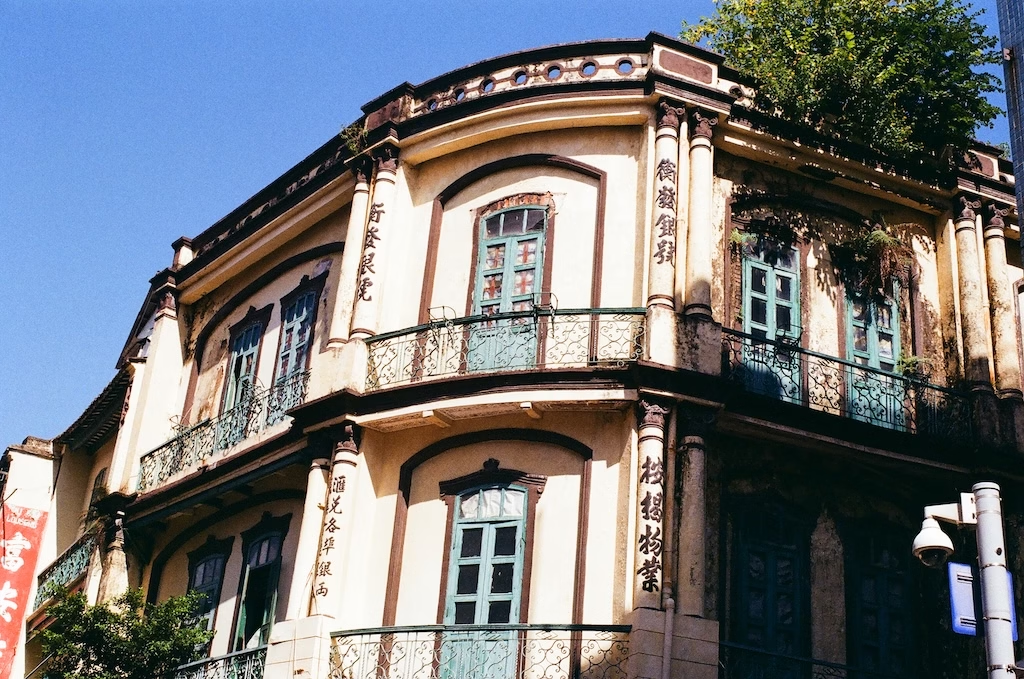
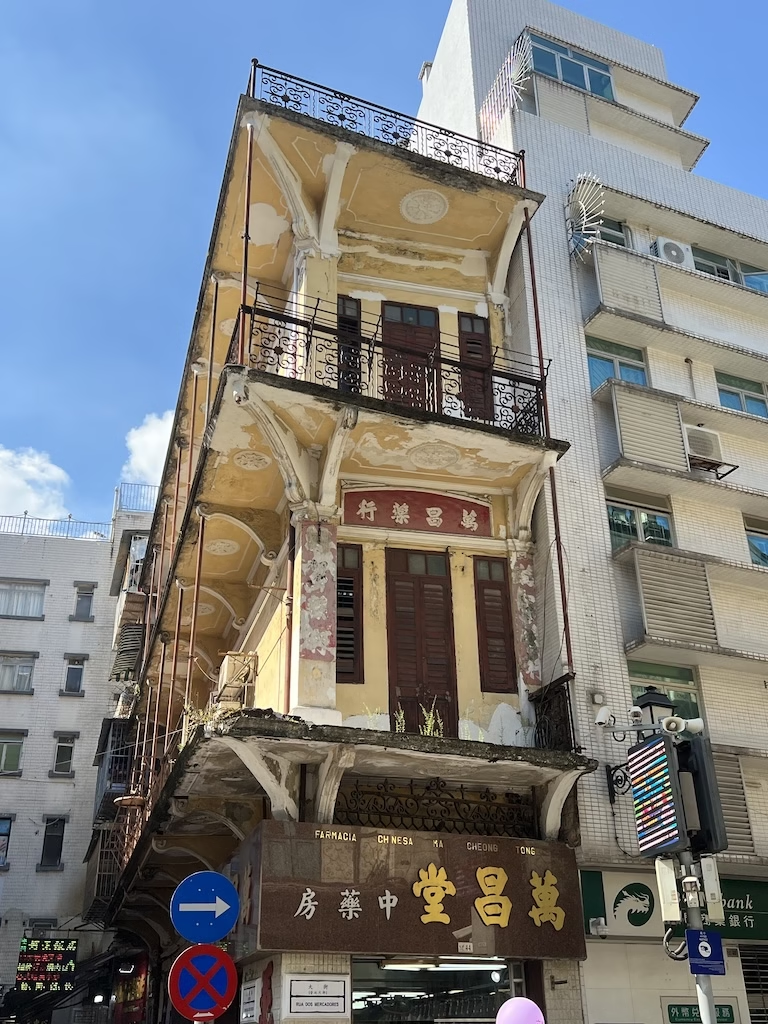
Surely, the Senado Square of Macau is full of colonial vibes with its beautiful antique buildings. But don’t be fooled, for the Square was as much a place of Chinese community as it was a Portuguese venue. This is evidenced by the many old Chinese tenement buildings (Tong Lau) in the Square, as well as the unmistakable presence of Chinese businesses there.
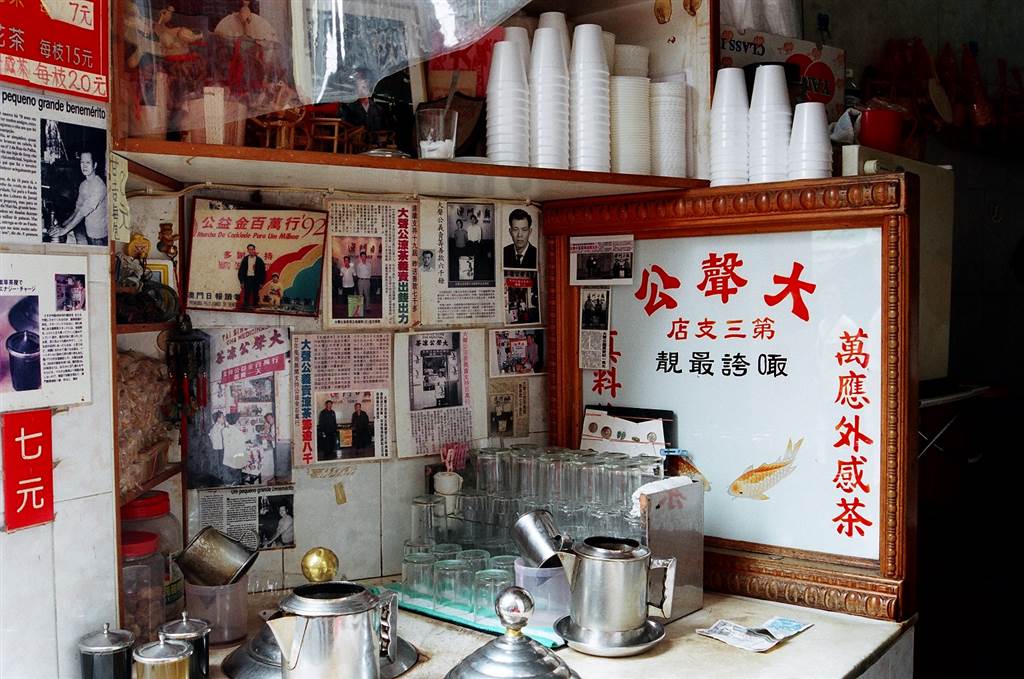
Do breathe in the cosmopolitan character of the Senado Square and enjoy the food and the vibes.
Sources
Descriptions on site at the Senado Square.
Macao Tourism Government Office, Headquarters Building of the Municipal Affairs Bureau (Former Leal Senado Building).
Macao Tourism Government Office, Senado Square.
Museu de Macau, Macao Postal Services.
The Website of Santa Casa Misericórdia.
The Wikipedia on Santa Casa Misericordia of Macau.
Macau Travel Hub, Macau General Post Office.