
Historic Macau — The Moorish Barracks and the National Day Fireworks
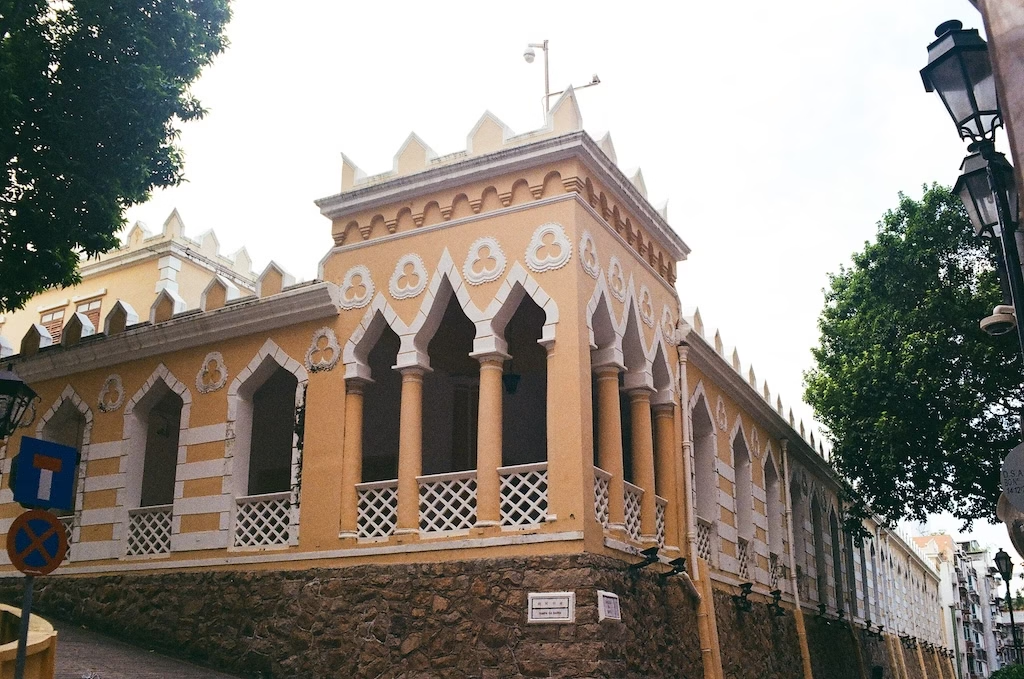
On the second day of the heritage tour in Macau, I visited the Moorish Barracks first, and then headed over to the Monte Fort and the Guia Lighthouse before going home. It was a very hot October day and the walking did amount to a hike.
The Moorish Barracks
I marveled at the unique architecture of the Moorish Barracks when I arrived. It is really nothing close to what I had seen thus far in Macau at that point. The antique buildings of Macau are very beautiful with heavy colonial influence. The Moorish Barracks is really quite another species.
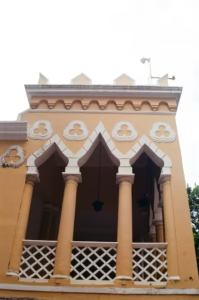
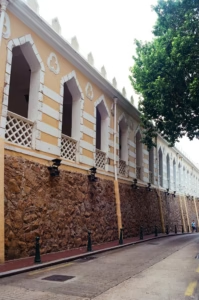
Moorish Barracks, in Portuguese Quartel dos Mouros, is a UNESCO heritage site. This structure of 1874 was intended for the accommodation of the Indian regiment of the police force. These Indian policemen were coming from Goa for law and order missions in Macau.
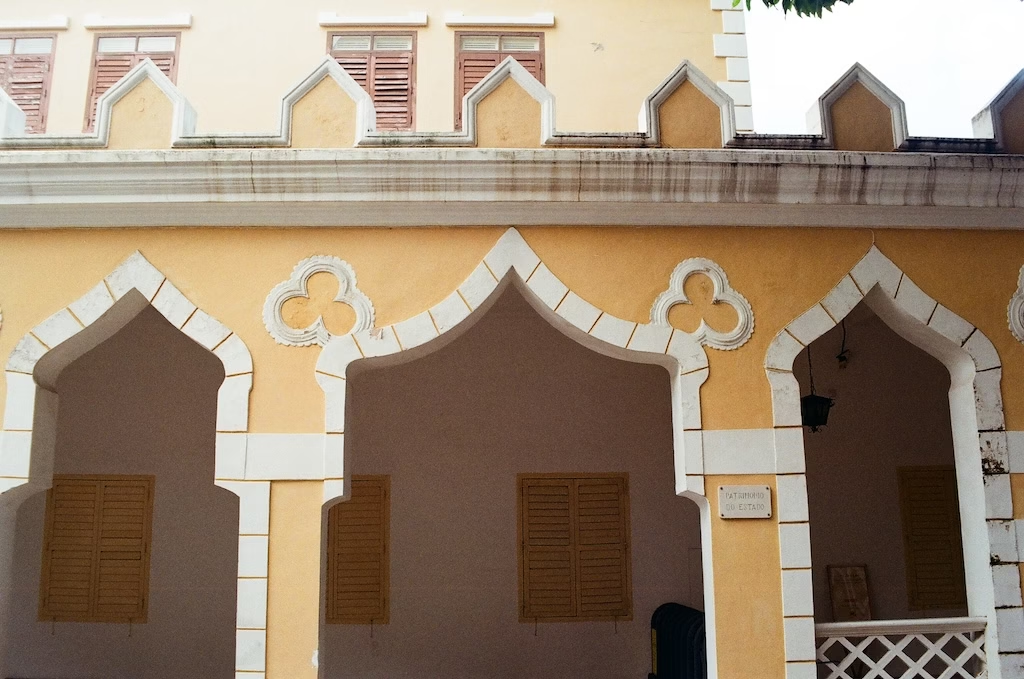
Perhaps then it is no surprise that the building shows architectural elements of Moghul influence, the creative vision of architect António Alexandrino de Melo. An arched verandah surrounds the structure in neoclassical design. You won’t miss it when you arrive at Barra Hill, its yellow and white colors stand proud and glorious upon its granite foundation on the street level.
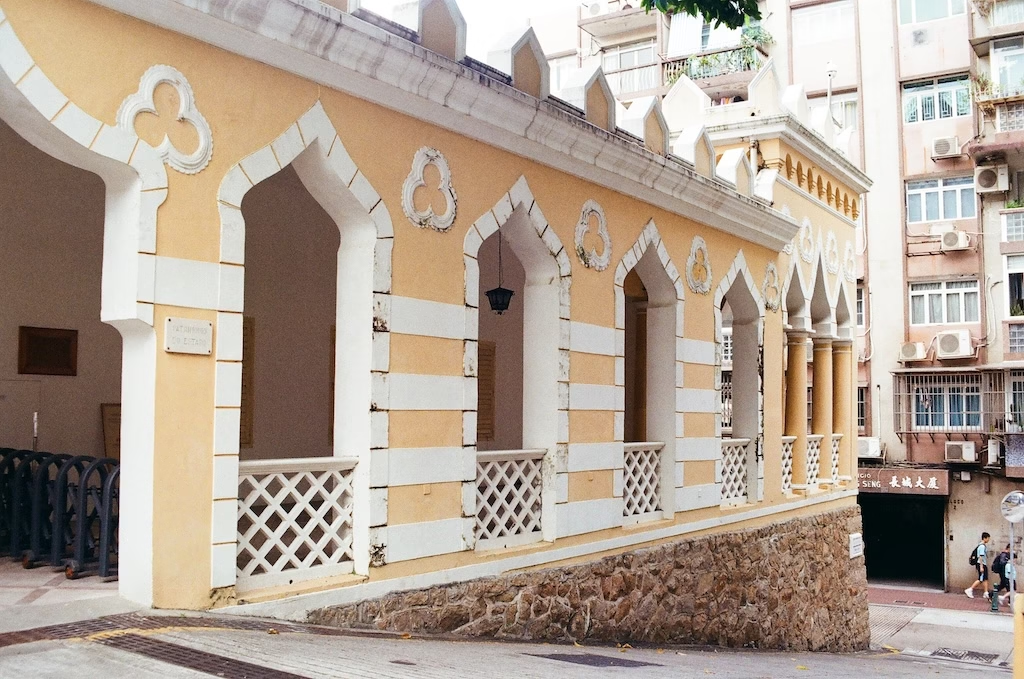
It takes just about ten minutes to do a quick walk-around and take photographs of the building. However, it is certainly worth a stop.
The Moorish Barracks is now the Headquarters Building of the Marine and Water Bureau.
The PRC National Day Fireworks
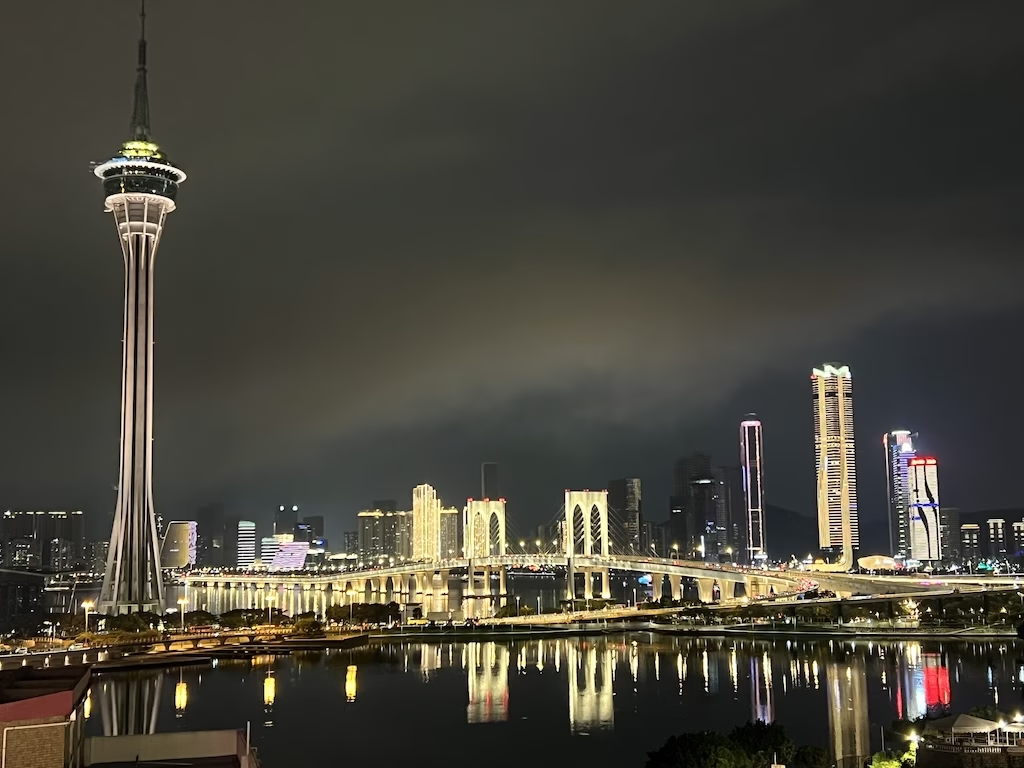
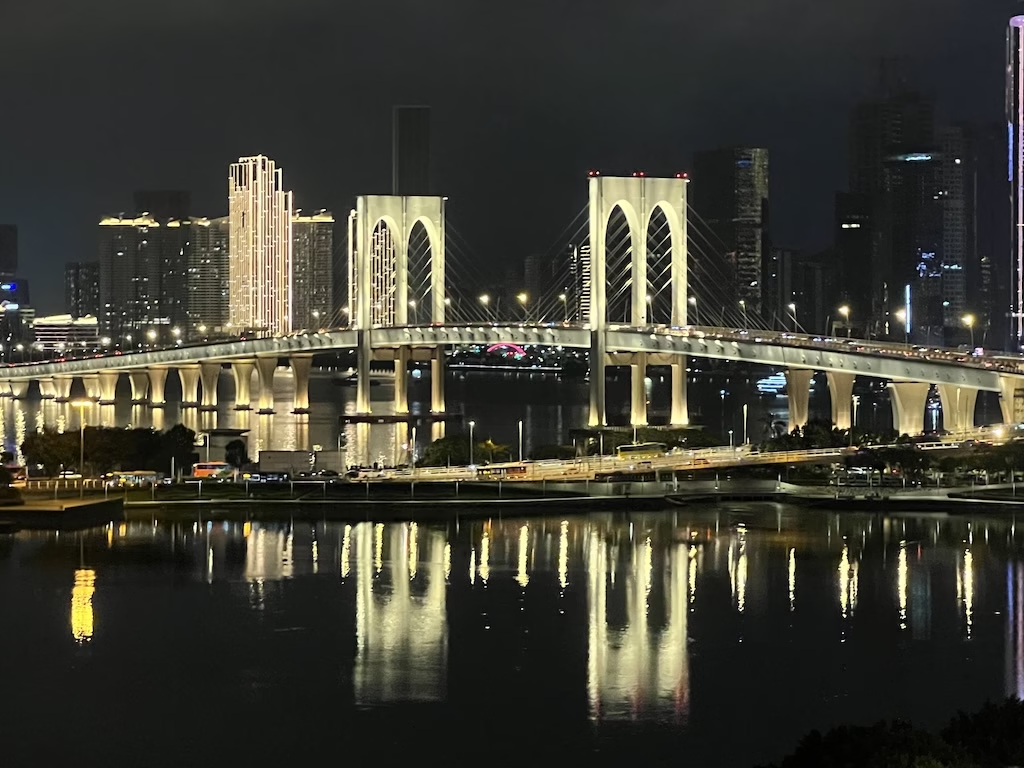
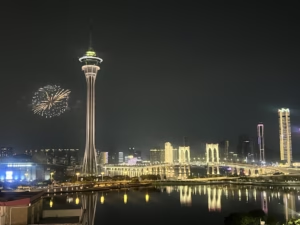
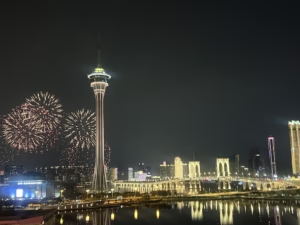
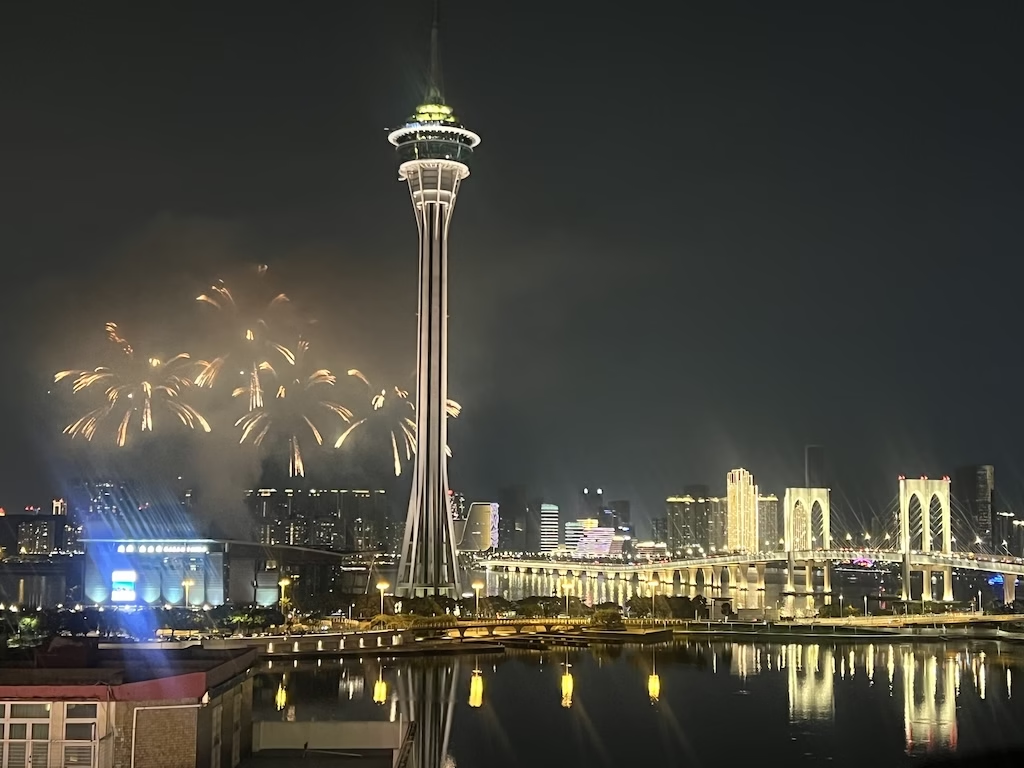
The previous night, I was pleasantly surprised by the PRC National Day Fireworks, which could be viewed at the public deck area at the Riviera Hotel. The fireworks were held at Nam Van, with the beautiful night-lit Sai Van Bridge as its backdrop. I will let the photos speak for themselves.
Perhaps it is worth a few words to briefly mention the relationship between Macau and China over its history. In the few centuries of Macau’s founding as a Portuguese city, China and Macau coexisted, mostly peacefully. China engaged in a “carrot and stick” policy toward Macau, “the carrot in the Chinese policy on Macau was the right for the Portuguese to conduct their trade undisrupted. The stick came in the various demands to which the Chinese authorities felt entitled, including the charging of customs by running customs posts, the charging of ground rent, and the ability to ‘call all the Chinese workers back to Canton’ at their whim. On a day-to-day basis, it was the Chinese watch force that maintained law and order in Macau.”
In Portuguese Asia (4), I discussed the fantastic battle that the Macanese waged against China to mark its territory in 1849, (and also to avenge the brutal murder of Governor Captain Amaral), known as the Pak Shan Lan Battle. This incident showed the Chinese authorities that the Macanese would fight and win. The battle quieted the Chinese tendency to intervene into Macau’s affairs.
The Sino-Portuguese Treaty that would have given Portugal the recognition of Macau as its colony failed to ratify in 1864. Portugal’s claim was formalized finally in 1888 by a protocol, with the initiation taken by Britain, which was only concerned with its leading status in the opium trade and its stature in the rivalry with France.
During WWII, Macau maintained a neutral status in the war. This results in an enormous influx of refugees both from China and Hong Kong. Macau took them in gracefully. In China’s revolutionary times after WWII, Macau had also taken in a large number of refugees from China as well.
After 1949, Hong Kong and Macau remained colonies of Britain and Portugal respectively. Following the Portuguese Carnation Revolution of 1974, the new government of Portugal wanted to divest of all its colonies, Macau included. At the time, New China turned down such request to reclaim Macau as its own.
The reason for China’s refusal is that at the time, Portugal demanded that China proceeds upon the premise that Macau was a colony of Portugal. China refused to do so, standing firm on its historical view that Macau was always part of China, and therefore not a colony established upon unknown land under public international law. If the premise is that Macau was a colony of Portugal, then the people of Macau would be entitled to consider national independence when the colonial power divests of the city, in accordance with the principle of self-determination.
The two countries began formal diplomatic relations in 1979. The ongoing negotiations resulted in plans for Portugal to hand over Macau to China as part of China’s territory in 1999. To Portugal, however, Macau has long since the 1970s ceased to be a part of Portugal.
As a colonial power, there is a chief difference in the way that Portugal and Britain handled the citizenship status of its colonial peoples. The Macanese that were born in Portugal Macau do have the right to claim proper Portuguese citizenship, whereas the people of Hong Kong were only considered British National Overseas, without claim to British citizenship.
Sources
Macao Government Tourism Office, Headquarters Building of the Marine and Water Bureau (Former Moorish Barrack).
The Wikipedia on Moorish Barracks.
Google Arts and Culture, Moorish Barracks.
KKNews, When Portugal Gives Up “Colonies” in 1975, Why Didn’t China Take Back Macau? (Chin).