
The Hung Shing Temple in Wan Chai
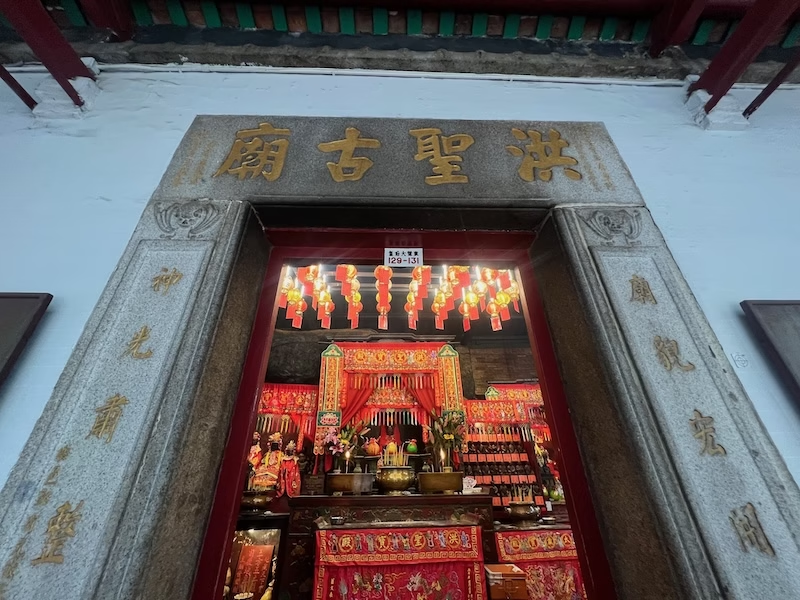
I was looking for a place of worship that has both historical and architectural significance. It came to my attention that the Hung Shing Temple in Wan Chai is a declared monument. I decided to pay a visit.
The History of Hung Shing Temple
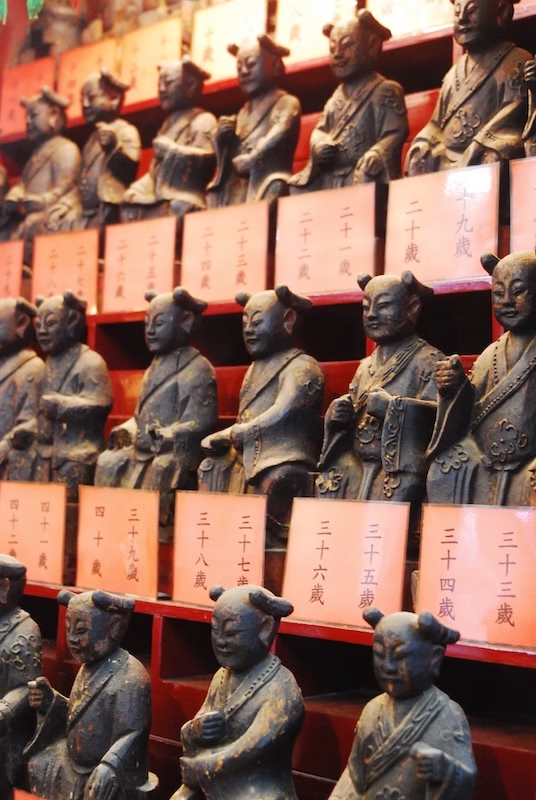
Also known as the Tai Wong Temple, Hung Shing Temple is traditionally a place of worship for the fishermen community. The conventional view is that the temple was first built in 1847. A comprador named Lee Foon Wai bought this piece of land in 1847, with a “carer of the Joss House” named Lee A Mui as the witness to this transaction.
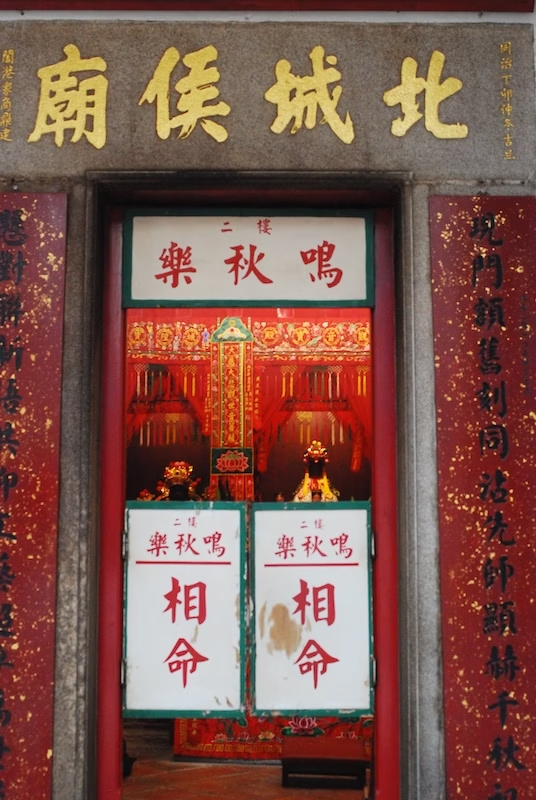
Standing next to the Hung Shing Temple proper is the entrance to the Pak Shing Hau Temple. It is part of the temple as the two are interconnected within their interiors.
Hung Shing Temple’s history is the perfect illustration of the idiom “the vast sea turns into mulberry fields.” This idiom expresses the idea that with time even natural landscapes will undergo a complete reversal. At its inception, the Hung Shing Temple was merely an altar set up by the fishermen community. At the time, the atlars overlooked the sea in Wan Chai. At its back the altar leaned against the great boulders that lined the shoreline.
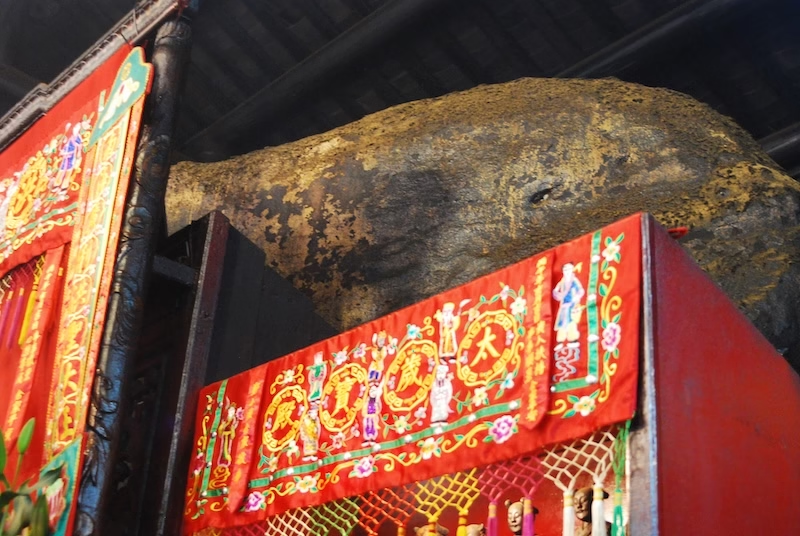
In fact, these great boulders remain inside the temple now.
In 1860, the 10th year of the Xianfeng Reign, the temple underwent an expansion. The current temple structure that houses the altar and the boulders was built then.
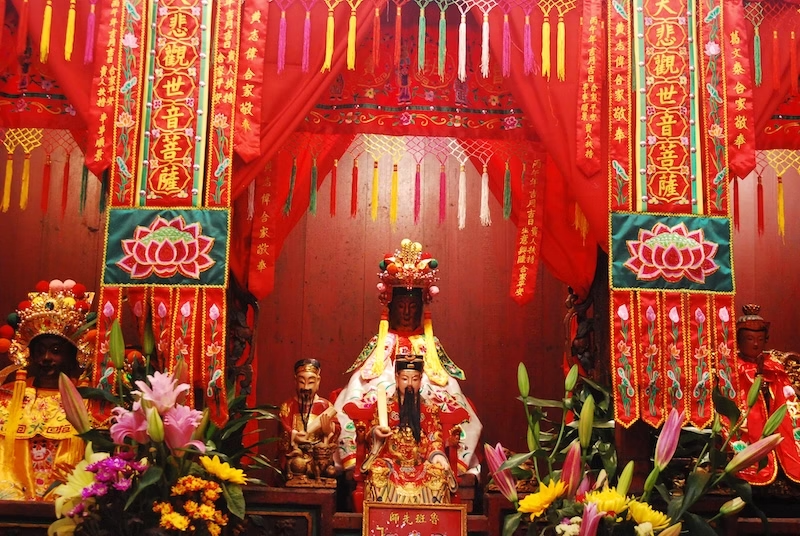
Now, those who have been to Wan Chai know that the Hung Shing Temple is now pretty much at the heartland of Wan Chai District. By walk, it takes one about 15 minutes to reach the current Wan Chai Pier from the Hung Shing Temple. Tall (and short) commercial buildings now surround the temple. But Queen’s Road East was the seaside throughway in the early colonial times. That is how much reclamation has changed the face of Hong Kong.
Across the temple, two cross streets of Queen’s Road East are named after this temple, namely Tai Wong Street East and Tai Wong Street West.
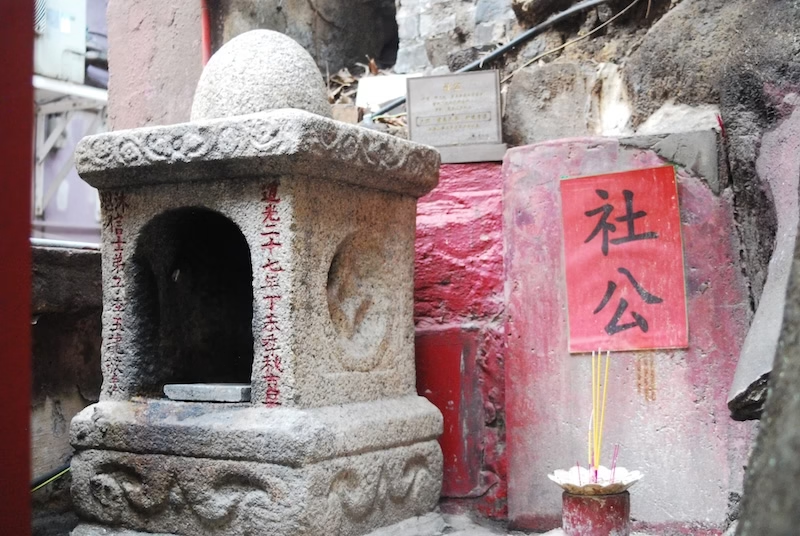
Hung Shing Tai Wong
Hung Shing Tai Wong, meaning the Great King Hung Shing, is a deity that protects those who sail at sea. One version of his life story has it that Hung Shing was named Hong Xi. He was a very important imperial official during the Tang dynasty. With his expertise in matters of astronomy and geography, Hong Xi helped the fishermen a lot. He died young, however, so people deified him as the god that protects those at sea. Another version has it that Hung Shing was the God of the Sea, and since the Tang Dynasty he was conferred the title of King Guangli of the Southern Seas.
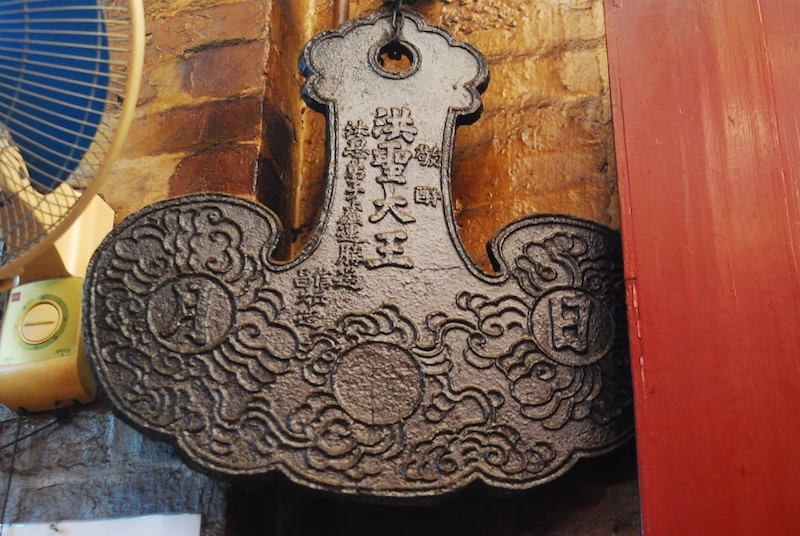
As a figure of worship, Hung Shing has a much longer history than other deified figures in Hong Kong, such as Hau Wong (believed to be of Song dynasty) and Tam Kung (believed to be of Yuan dynasty).
There are quite a number of Hung Shing Temples in Hong Kong. In Lantau Island alone, there are 6 Hung Shing Temples. In Kowloon, there is only one. In Hong Kong Island, there is another Hung Shing Temple in Shau Kei Wan.
Some Architectural Features to Note
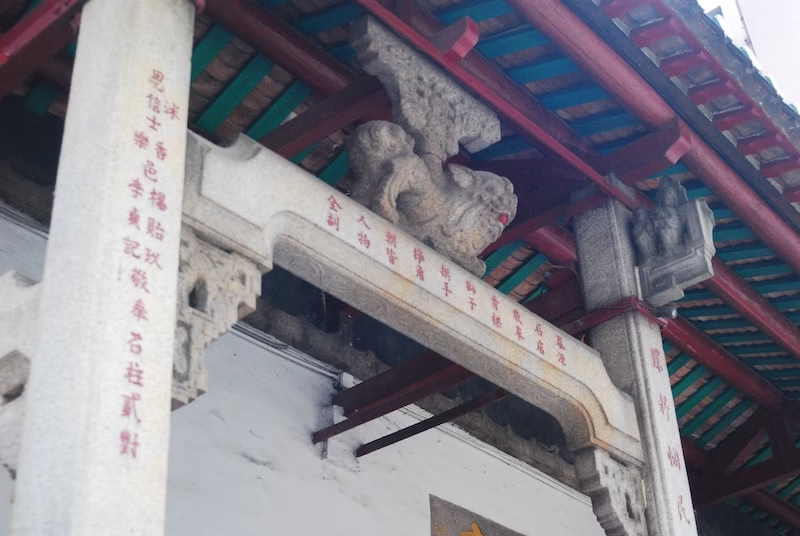
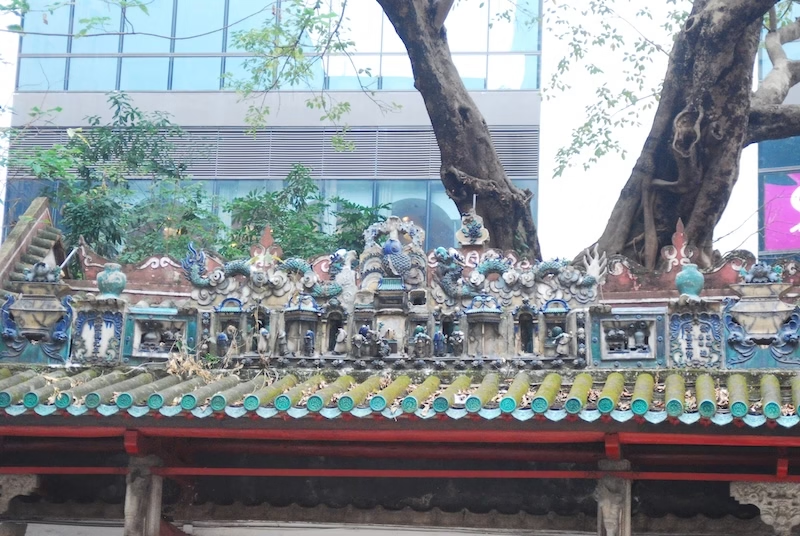
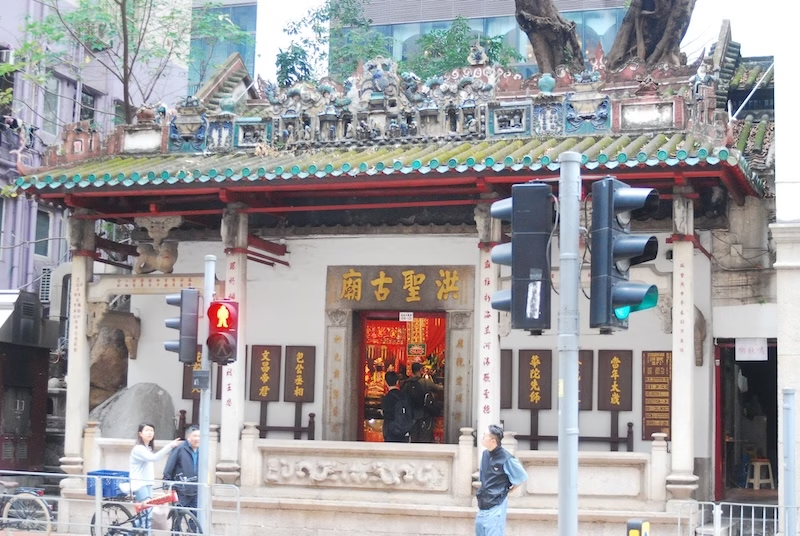
The temple is a rather small one, with a one hall, three room format. On its face, the temple seems to bear all the common features of a local temple: lined with Chinese glazed tiles on a gabled roof, with an elaboration of clay figurine adornment atop. There is a couplet on the two sides of the main entrance. A stone plaque inscribed with the temple’s name in gold lies on the top of the entrance. Yet there are also some unusual features.
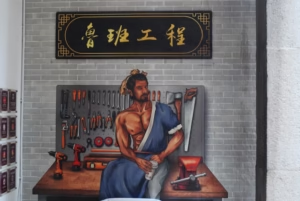
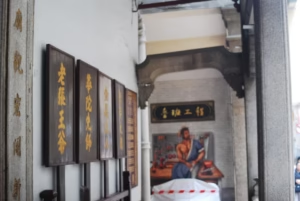
On the exterior, there is a mural showing Lu Ban. Lu Ban is revered by the craftsmen because he was a very skilled carpenter. This reference to Lu Ban at the Hung Shing Temple is perhaps the only such reference other than the Lo Pan Temple (located in Sai Wan) itself, which is also a declared monument.
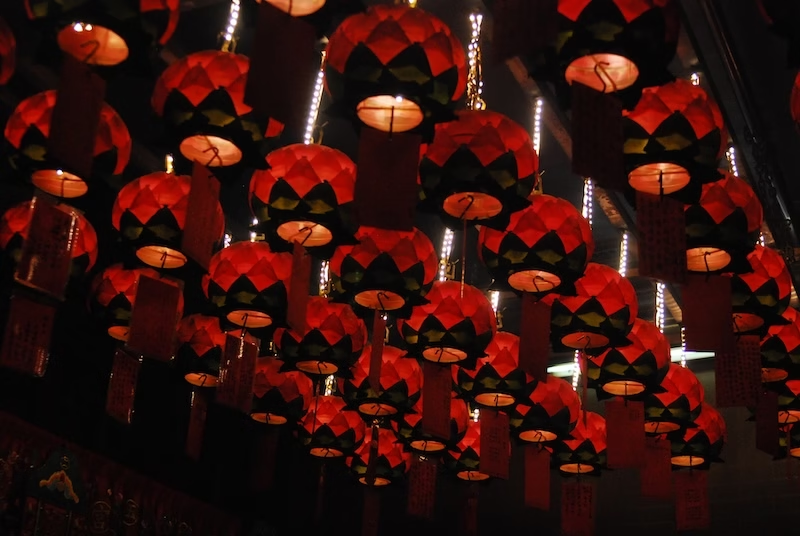
The lanterns are also very beautiful. The lanterns are in a lotus shape likely because there are two female deities in residence at this Hung Shing Temple. Both of these female deities protect the feminine qualities of their worshippers.
The golden dragon boat is clearly an acknowledgement of the faithful followers that sail the seas.
There are the bronze bell and the plaque. But surprisingly, the other usual item in Chinese temples, the drum, was not seen in the Hung Shing Temple.
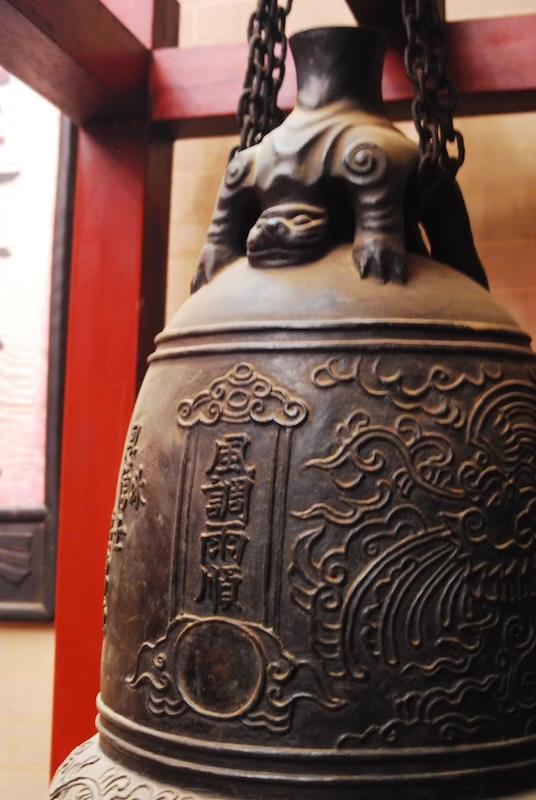
The Tung Wah Group of Hospitals manages the Hung Shing Temple. The Hung Shing Temple of Wan Chai is a declared monument. Its address is 129 Queen’s Road East, Wan Chai.
Sources
The Wikipedia on Hung Shing Temple.
Tung Wah Group of Hospitals, The Hung Shing Temple of Wan Chai (Chin).
坐言集,灣仔洪聖廟 (Chin).