Historic Macau — The St. Paul’s Ruins and Na Tcha Temple
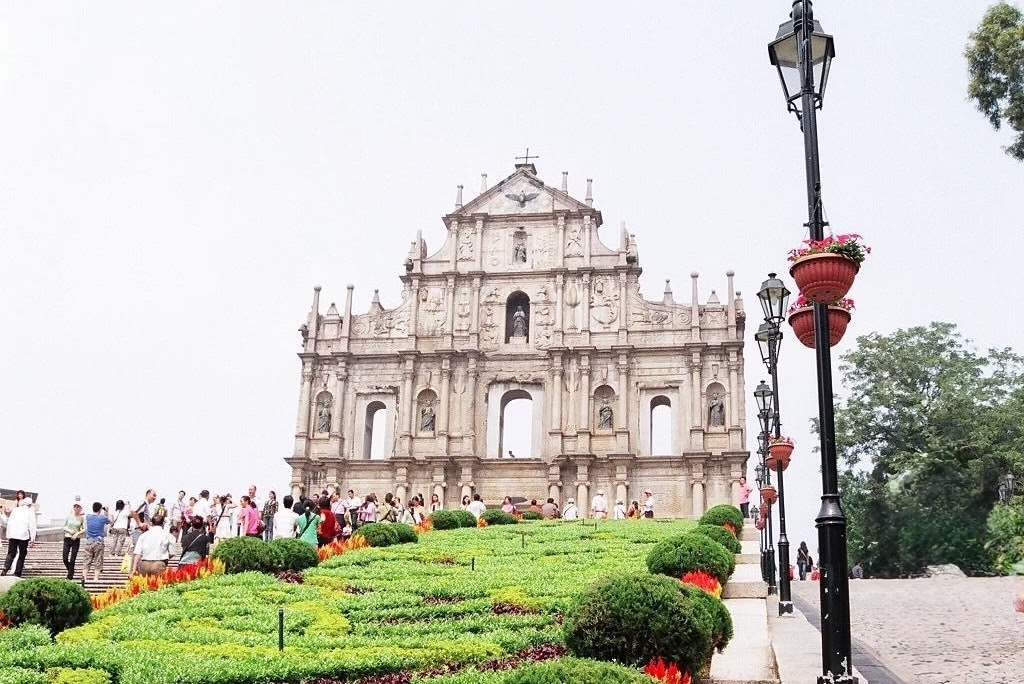
What I had in my mind for the day is the Monte Fort, but before then, let’s go through the St. Paul’s Ruins and the Na Tcha Temple, both of which are on the way.
The St. Paul’s Ruins
Originally the St. Paul’s College and St Paul’s Church (Mater Dei, Church of the Mother of God), what is now the St. Paul’s Ruins was an established institution of religion and learning in Macau during the early 17th century. The Jesuits built the St. Paul’s College between 1602 and 1640. At the time, the intention was to give home to the Japanese disciples of Catholicism that faced persecution by the order of Toyotomi Hideyoshi to ban Christianity in 1587. The Japanese Catholics that made their way to Macau also worked on the building and decoration of the college itself. The St. Paul’s College was also a school to train the missionaries that are called to missions in China.
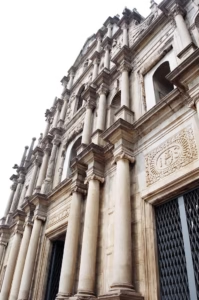
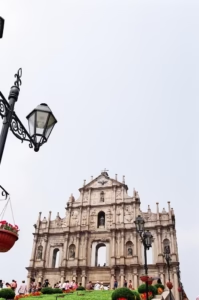
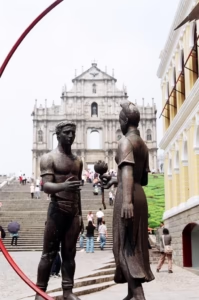
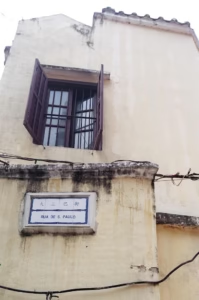
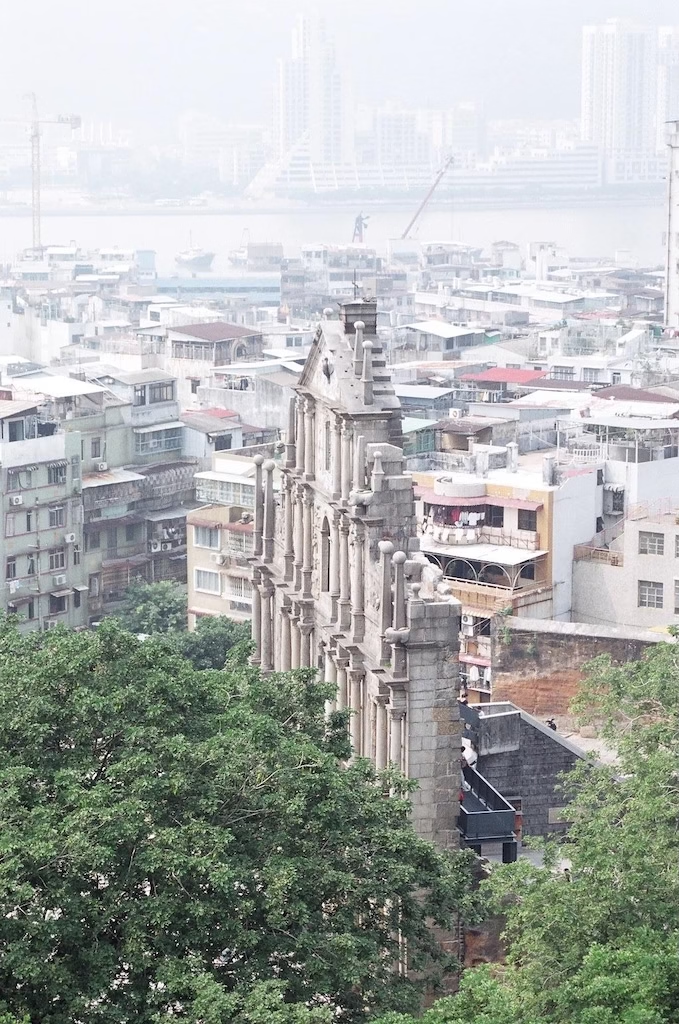
During the 17th century, St. Paul’s in Macau was the largest Catholic church in Asia, as such, it was also known as “the Vatican of the Far East.” In 1835, a fire during a typhoon destroyed the 17th century structure. Only its granite façade remains now, as the rest of the structure was built in wood. Yet even just a glimpse of the façade is enough to show the holy glory that it once stood for.
Fast forward to the 1990s, there were discussions about pulling down the façade because the structure might present grave risks of collapse. The Macau government then excavated the site between 1990 and 1995. Then it added reinforcements to buttress the structure.
The Na Tcha Temple
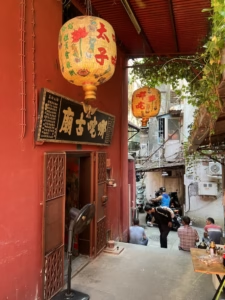
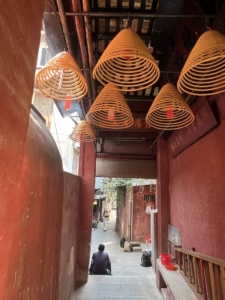
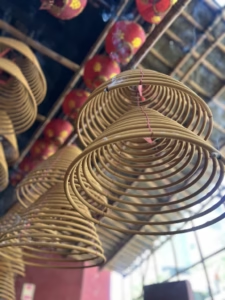
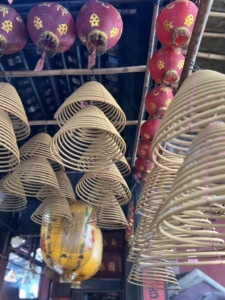
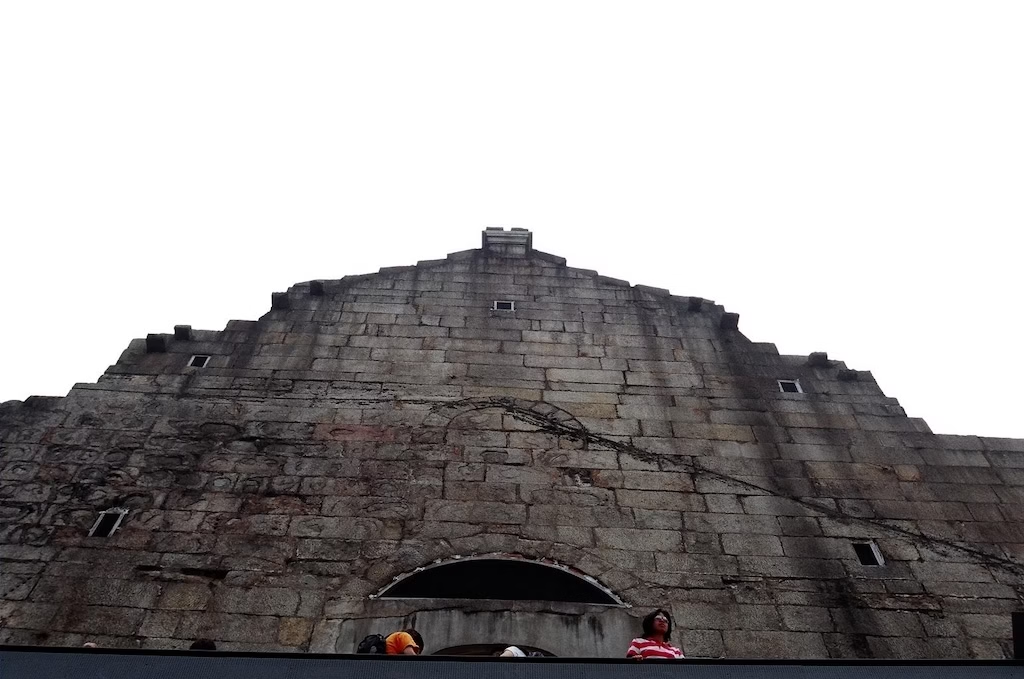
The locals constructed the Na Tcha Temple in 1888 in the attempt to cast away a plague that was going around in the region. The traditional temple reveres Na Tcha, a character in Chinese folklore. He is also a key figure in Taoism.
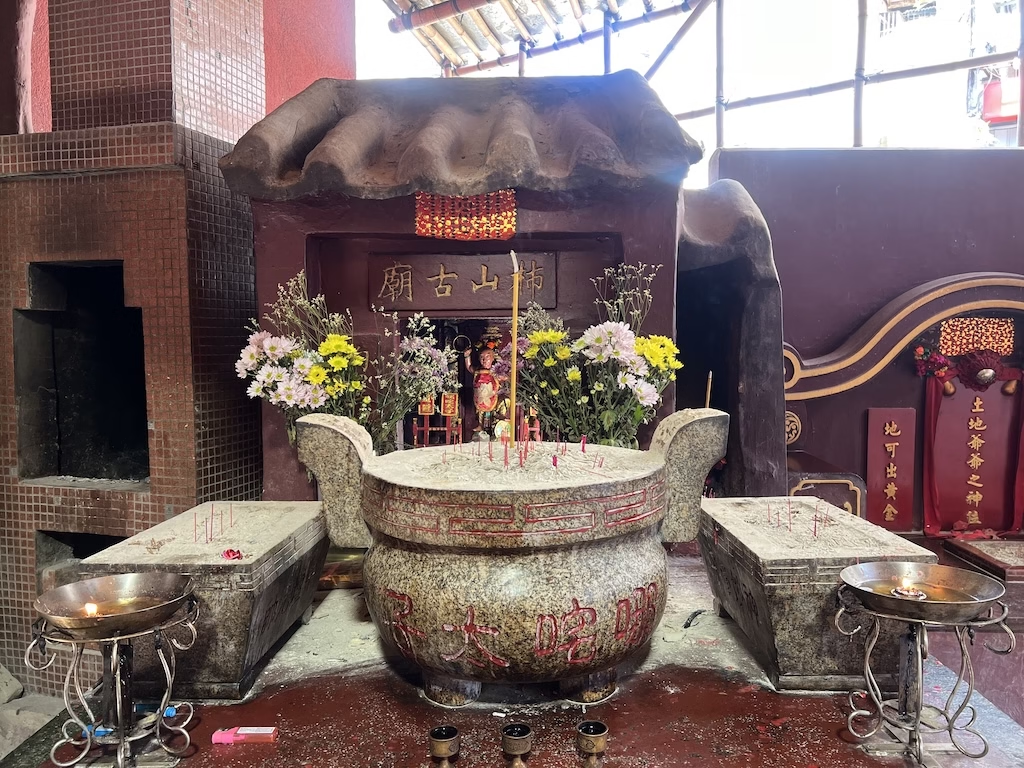
In Chinese Taoism, Na Tcha is the third son of Li Jing, who is the “heavenly king with a pagoda in hand.” He is a character in the famous novels, Journey to the West and Creation of the Gods. In the Ming dynasty rendition of his life, it was said that he is the son of King Li Jing, but he kills the God of Dragon by mistake. In order to avoid dire consequences for his family, he kills himself. He pleads with the sage Sakyamuni, who then revives him with a lotus. As he lives thereafter, Na Tcha uses the special superpowers given him by Sakayamuni and destroys many figures of the evil forces.
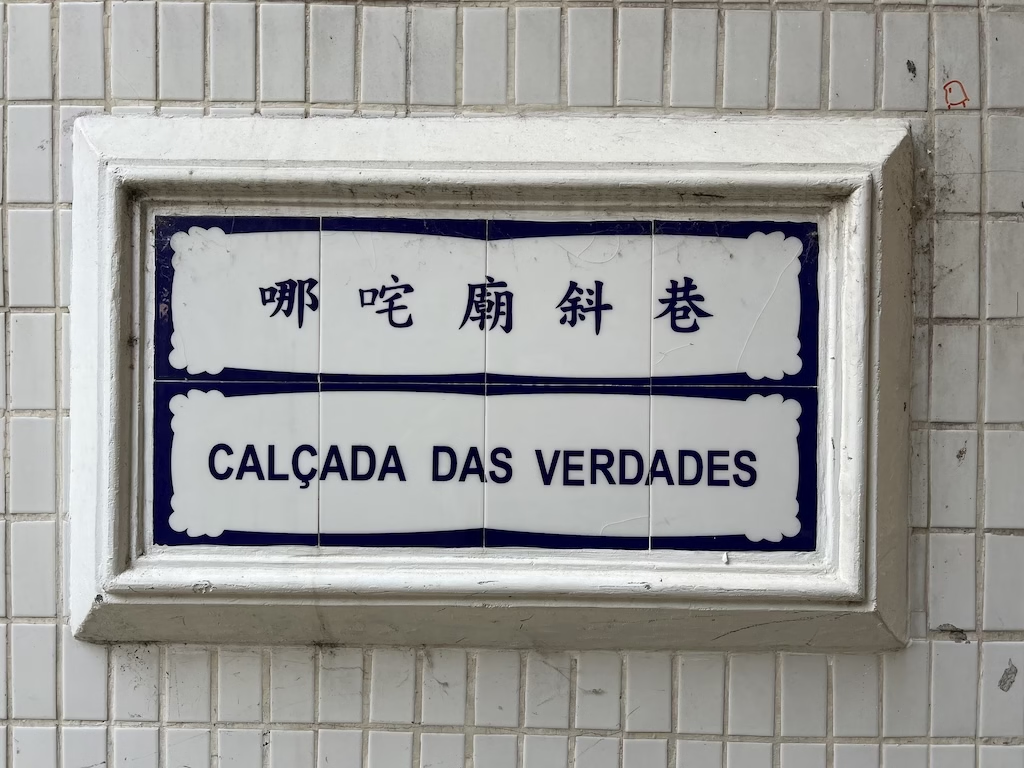
The Na Tcha Temple is a designated site of the UNESCO-recognized Macau heritage. A quick stop at the Na Tcha Temple takes about 5 to 10 minutes for photographs. It is quite beautiful in its own right. A point is raised that its proximity to the St. Paul’s Ruins shows the character of “east meets west” in Macau, where traditional Chinese faith is just a stone’s throw away from a significant structure that represents western religion.
Sources
The Wikipedia on St. Paul’s Ruins.
The Wikipedia on Na Tcha Temple.
Macao Tourism Office on Na Tcha Temple.
The Wikipedia on Na Tcha (Chin).