
Historic Macau — Guia Fortress, Chapel and the Lighthouse

The Guia Fortress would be the final stop for this historic excursion into the roots of Macau’s proud history. After lunch at Wabi Sabi, I made me way up a gentle incline to the Guia Fortress. Guia Hill is the highest point in the Macau Peninsula at 91.6 meters. Needless to say, like the Monte Fort, this is a perfect vantage point in which to enjoy the aerial view of the Macau Peninsula.
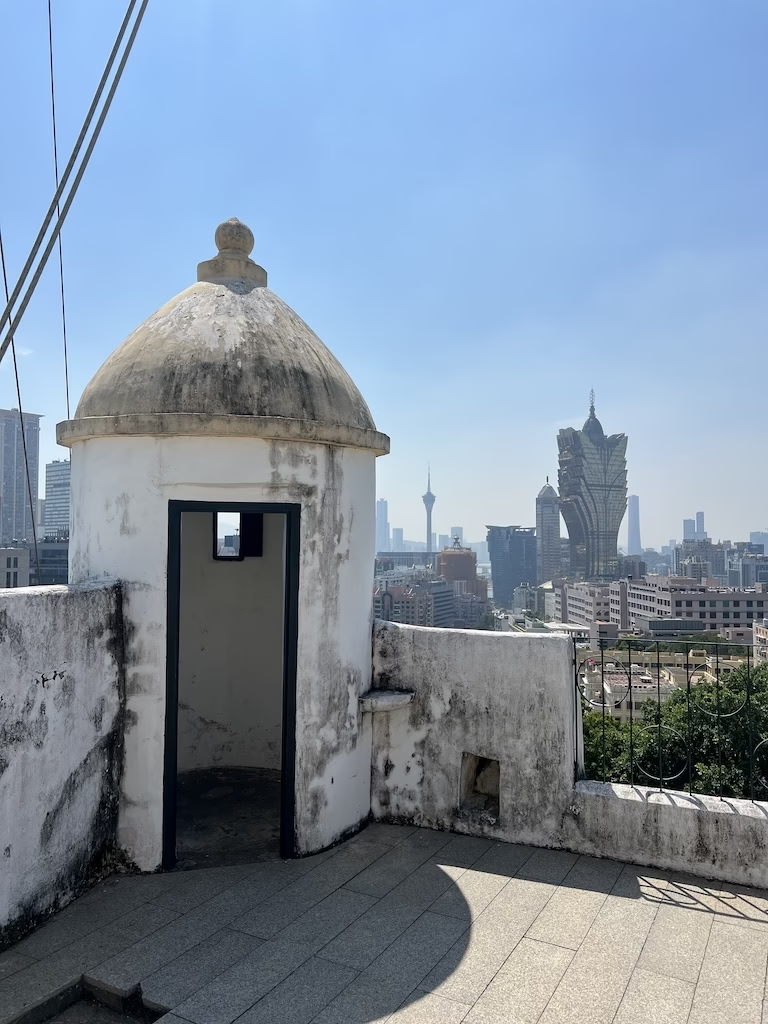
The Guia Fortress had served a weather-telling function of Macau’s observatory. Before heading up the historic structures, you would go through a small exhibition featuring the observatory’s work here. It mainly involved the hoisting of typhoon signals.
Guia Fortress
Along with the Monte Fort, the Guia Fortress was critical in the defense of Macau during the Dutch Invasion of 1622, at which time construction of the Guia Fortress had begun in anticipation of the impending conflicts with the Dutch. The period of construction took place in 1622, and the fortress was further expanded in 1638. The Guia Fortress consisted of a guardhouse, a magazine and a tower. The 52-meter air Guia Hill Air Raid Shelter had a generator, oil storage, lounge, and a lift to the light house. It is now a venue of exhibition.
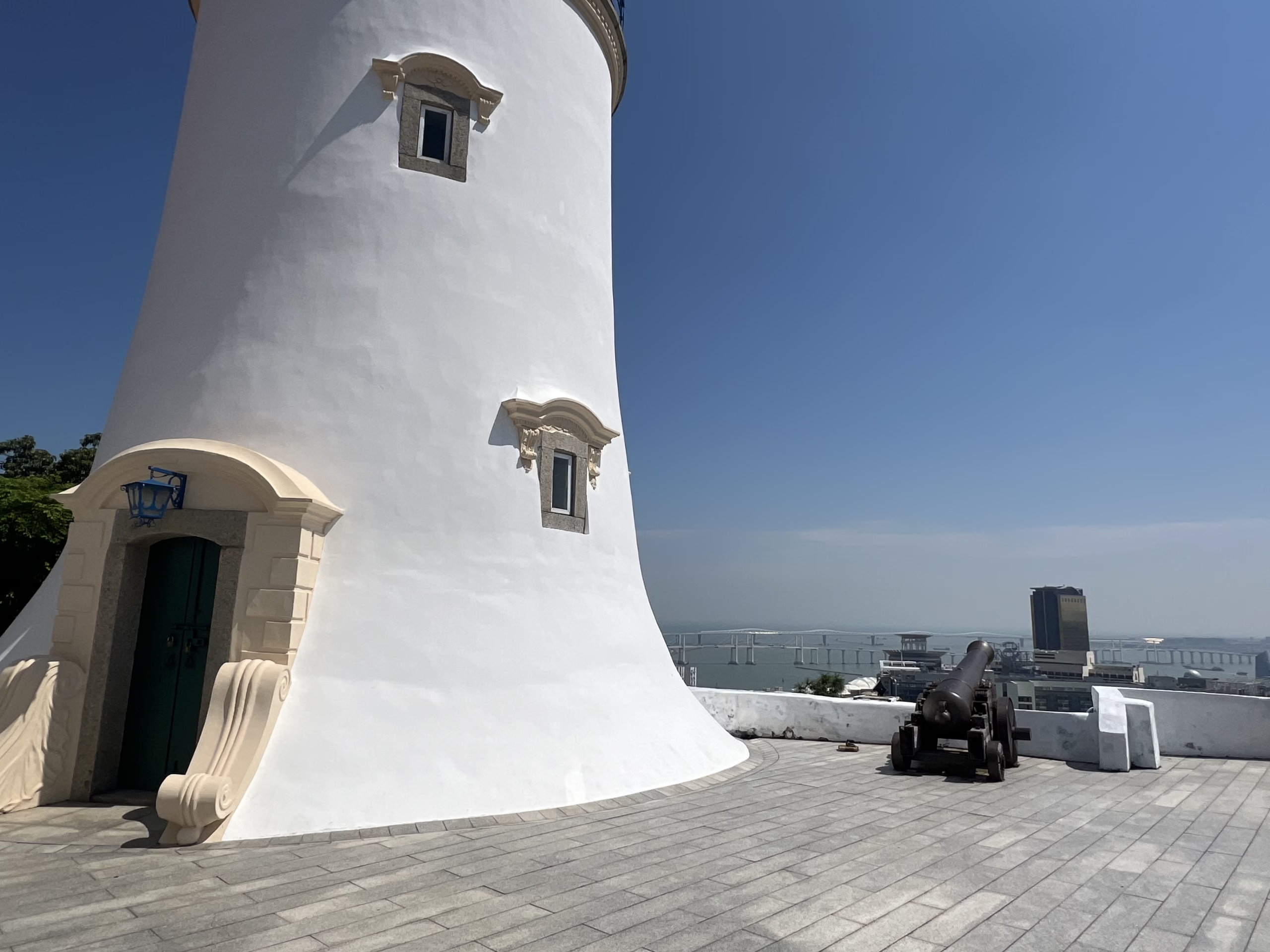
For centuries, the Guia Fortress served as a structure of defense exclusively. The military use would continue until 1976, when the Portuguese forces withdrew from Macau after the post-revolution Portuguese government decided to divest of all its colonies in the world. Perhaps then it was only natural that the Guia Fortress took up a new role as the cultural spokesperson of Macau, its ruins attesting a proud history in defending Macau.
Guia Lighthouse
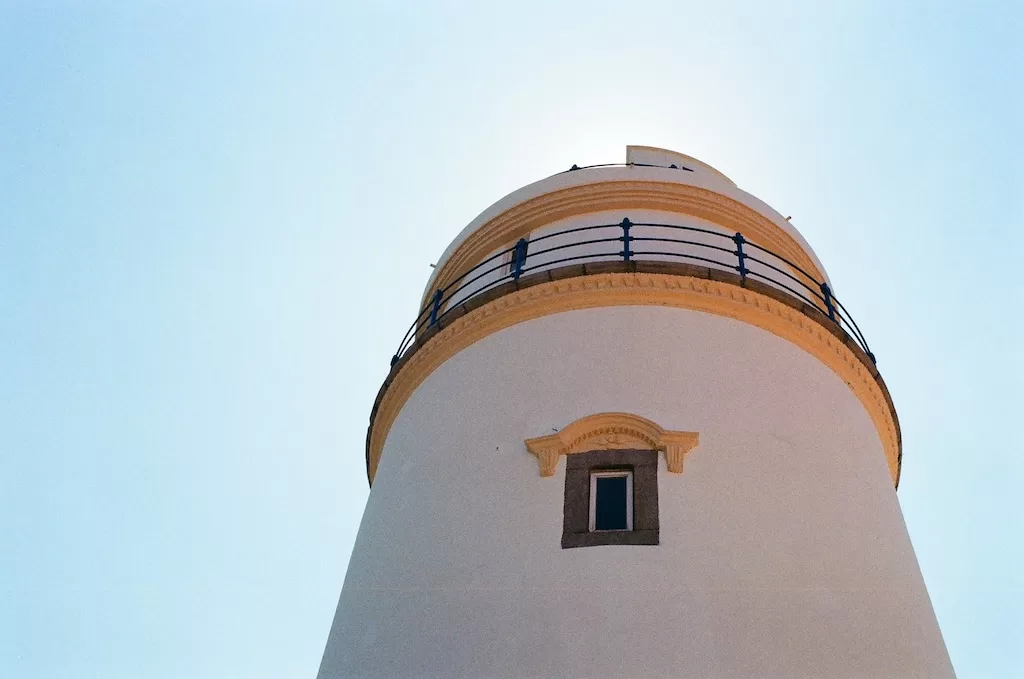
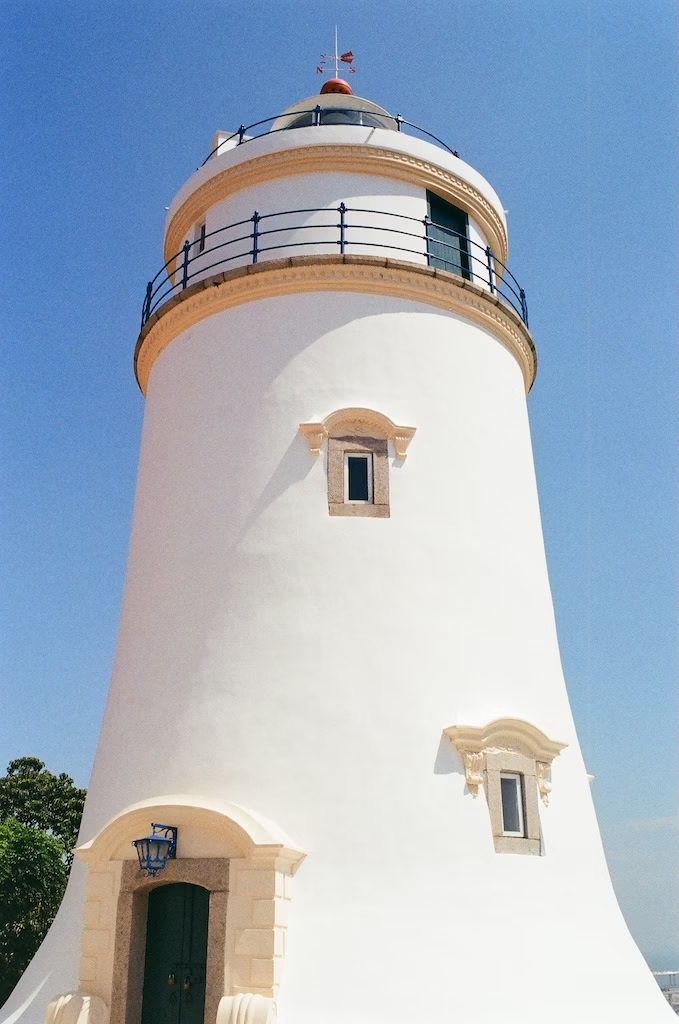
The Guia Lighthouse is not open to the public, but the beautiful architecture itself is a great attraction. Built in 1865, the Guia Lighthouse was the first western, modern lighthouse in China. It stands at 15 meters in height. In clear weather, the lighthouse has the visibility of 32km.
Macau’s coordinates are based on the exact location of the Guia Lighthouse.
Capela de Nossa Senhora da Guia (The Chapel of Our Lady of Guia)
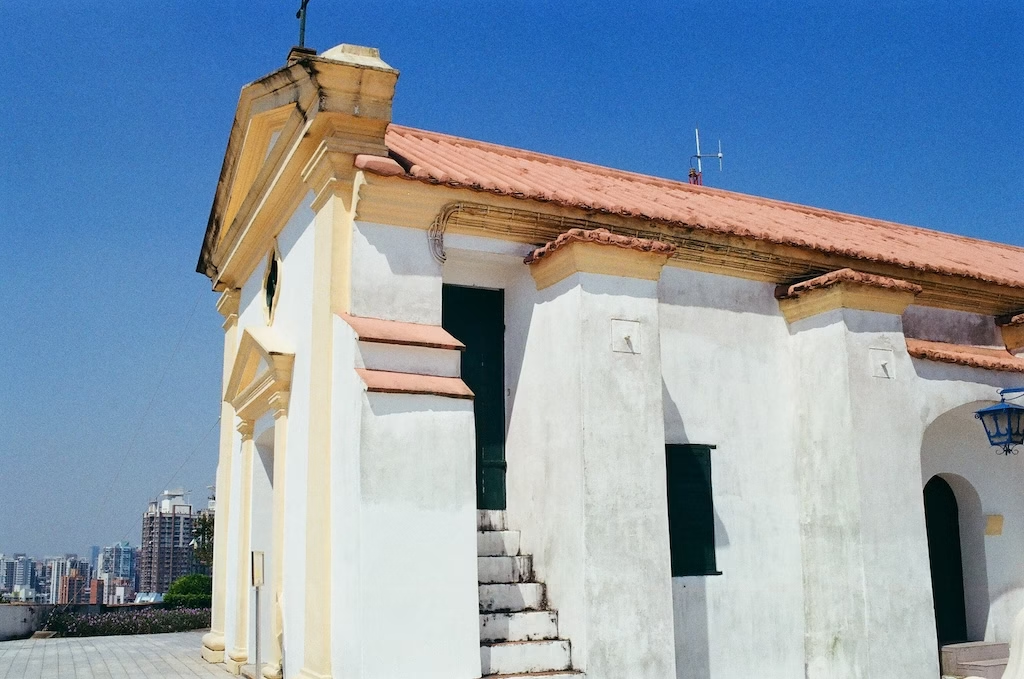
The Clarist nuns of the Philippines arrived in Macau in 1633. They were housed in the Capela de Nossa Senhora da Guia, which was built in 1622 by the nuns of the Order of St. Clare. The current church structure was of 1637. The Guia Chapel was therefore a witness to the Clarist nuns’ ministry around the time that the fort was built. Thereafter, the Clarist nuns established the Convent of St. Clare.
The Architecture of the Capela de Nossa Senhora da Guia
The Chapel of Our Lady of Guia, also known as the Chapel of Our Lady of the Snows, is built in granite. With dimensions of 16 meter in length, 4.7 meters in width, the church façade features a pediment outlined in yellow and a white front. There are stairs on the side leading to the rooftop. The church also comes with a sacristy.
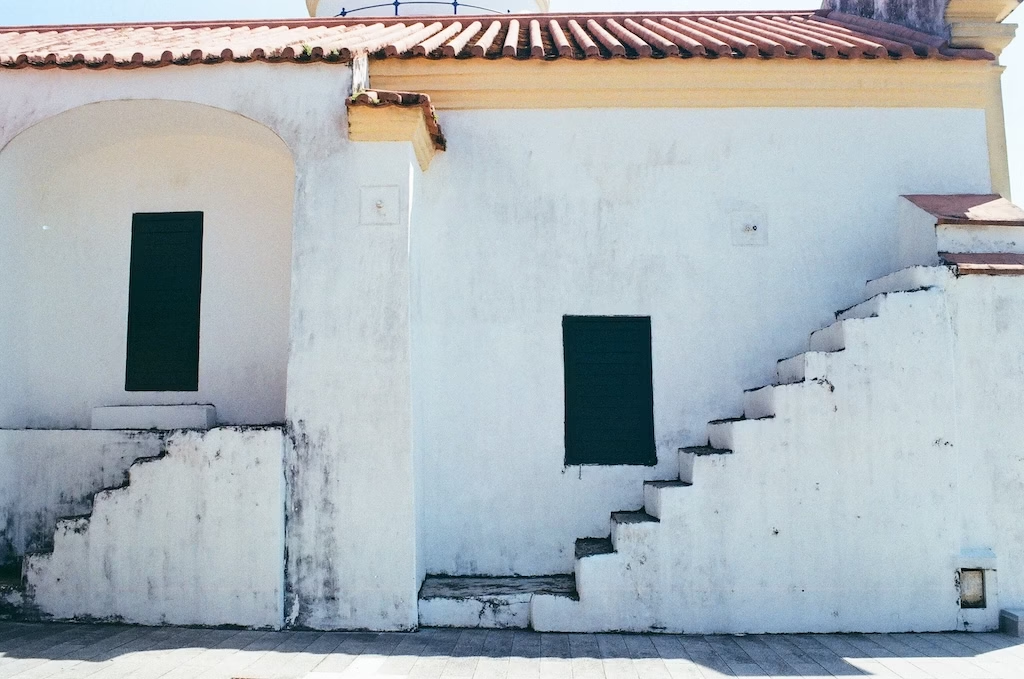
One architectural point to note is that the church is built in granite with a very thick wall as its support structure. The walls of the chapel are more than one meter in thickness. This is markedly different from other religious structures in Macau, whereby the churches are built in wood with beams as the support system. Although the rooftop is a gabled roof, the interior of the chapel is one of a barrel vault. Scholars have noted that this feature is more consistent with the style of small churches in the Philippines, known as “earthquake baroque.”
Frescoes of Unique Artisanship
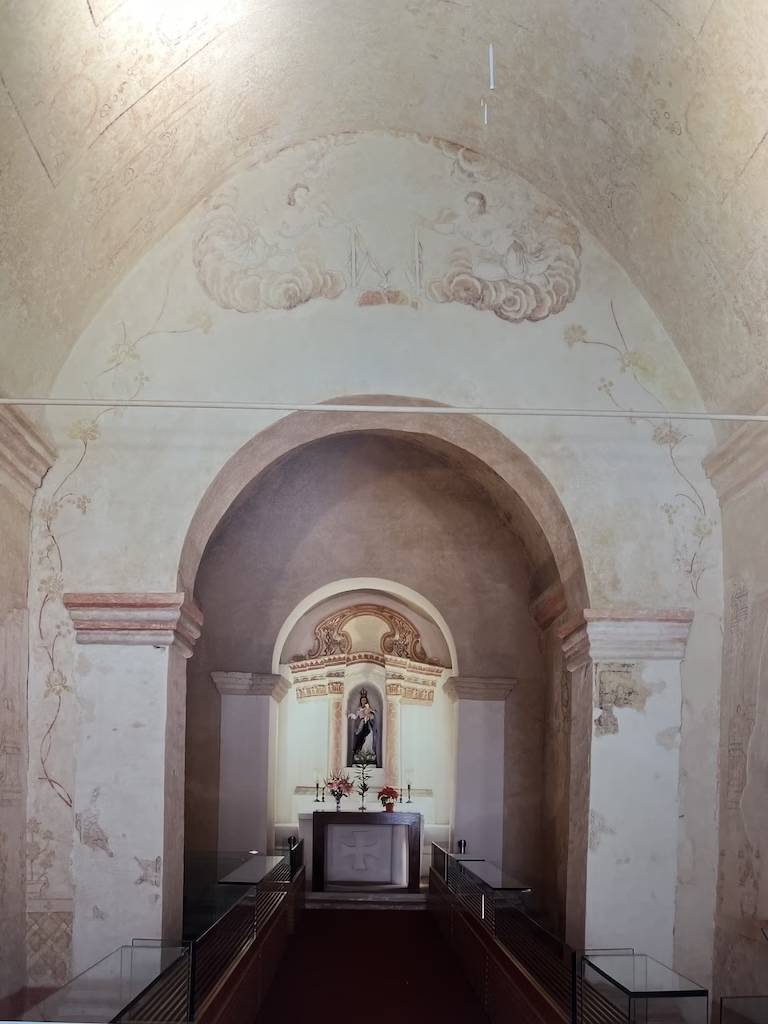
The Chapel now exhibits the frescoes that are part of the incredible heritage that marks the cultural significance of the Guia Fortress. The frescoes show biblical tales depicted in a Chinese artistic tradition, with a touch of mythology. This blend of Chinese artistic expression in biblical representations is unique even in all of Macau’s religious architecture.
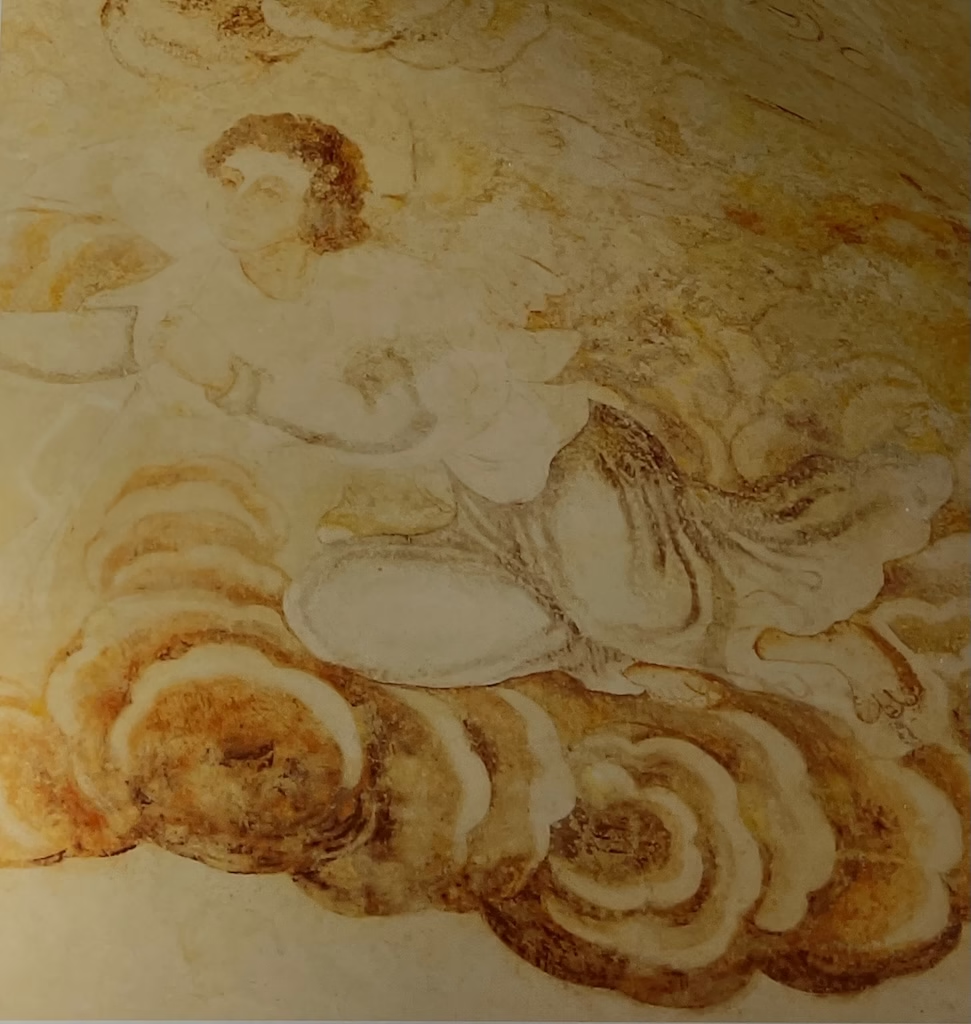
Frescoes are the wall paintings where pigments are mixed into the wet fresh plaster immediately after it is applied to the wall. As the wet plaster dries, it absorbs the pigments and painting becomes part of the wall. It is therefore more durable than other forms of murals.
Over the years, the frescoes were covered by many different layers of plaster. Between 1996 and 1998, restoration work was conducted on the Chapel. Workers discovered the frescoes. With due care, the workmen chose the best matching materials and pigments for each section, exercising scientific methods in the process. They had to remove the mud and the coating without scraping away the pigments.
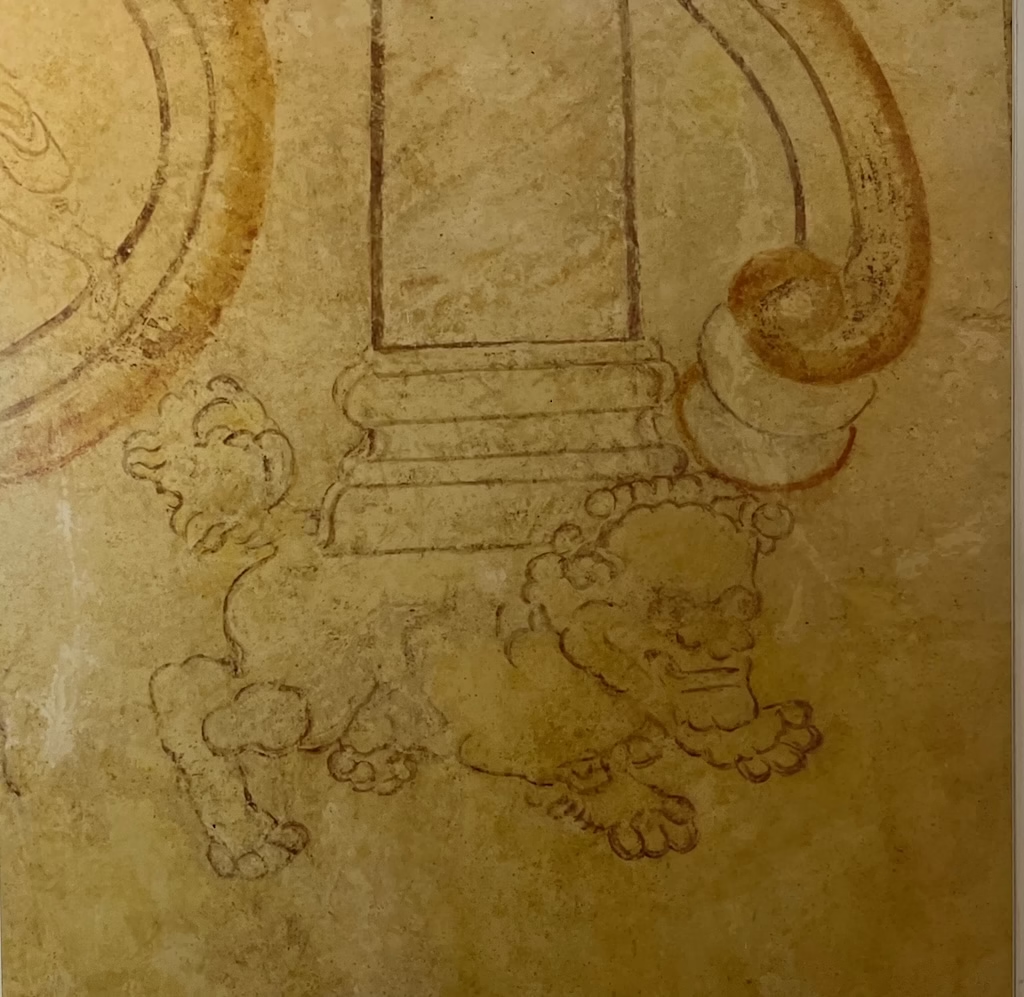
Although both the fortress’ defensive function and the chapel’s religious purpose have retired into the folds of history, the art displayed in the Chapel is the unique testament to Macau as a Portuguese territory in China, where eastern and western influences met and fused into one another.
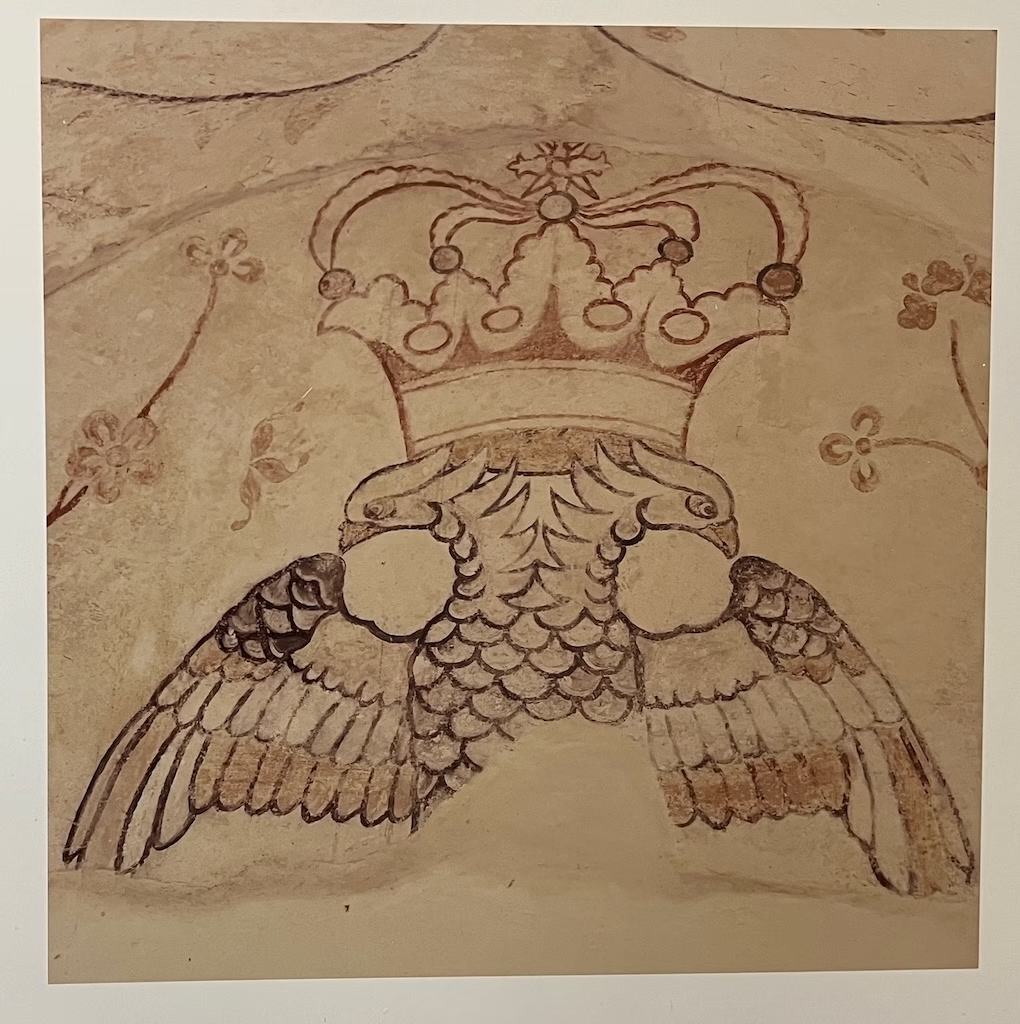
Photo: The dual eagle image fresco features two eagles with a crown.
The opening hours of the chapel are 10:00 am to 5:o0 pm.
There is supposedly a cable car that can take visitors up to the top of Guia Hill, where the Fortress is situated, but I didn’t notice such when I visited. It was a pretty hot day that I went and so if you are to walk up the hill, prepare enough water with you.
Sources
Descriptions on site at the Guia Fortress.
The Wikipedia on the Guia Fortress.
Macao Tourism Office, Guia Fortress, Chapel of Our Lady of the Snows and Lighthouse.
O Clarim, Macau Church Heritage – the Guia Chapel.
Baike.baidu.com, Chapel of Our Lady of the Snows (Chin).
Gu Yeung, The Relics of the Order of the Augustine in Macau – Beginning with the Crowned Dual Eagle of the Chapel of Our Lady of the Snows (Chin).