
Historic Macau — The Spanish Augustinians in Macau and the St. Augustine’s Church
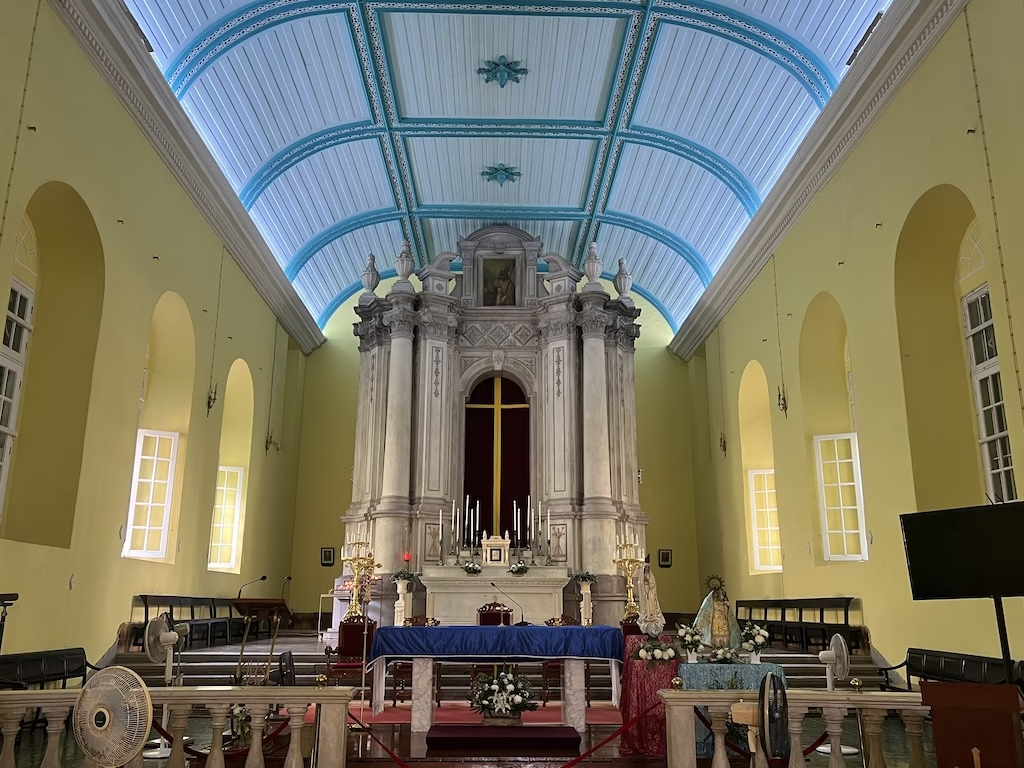
Not far from the St. Joseph’s Seminary and Church is the St. Augustine’s Church and the St. Augustine’s Square. Following the footsteps of the first Catholic missionaries, the Jesuits, the Augustinians also made their way to Macau in the 1580s. Other Catholic missionaries that came around the same time were the Dominicans and the Franciscans.
A Brief History of the Augustinian Order in Macau
Unlike the first Jesuits that arrived in Macau with the specific goal of ministering the Portuguese population there, the first Augustinian priests in Macau were of Spanish origin. They were the fathers from Manila in the Philippines, who were looking to do missions in China.
Before the rise of Hong Kong as a British colony in the 1840s, Macau was deemed the doorway to China. But even then, Macau as the entry point to the establishment of Catholic Augustinian missions in China was considered a last resort to the Spanish Augustinians.
Back in Europe, the period between 1581 and 1640 was a dual monarchy, where the Spanish kings ruled both Portugal and Spain under the name of Iberian Union. It was during this time that the Spaniards sought to actively expand their influence, in matters of trade, colonial dominion and religion, in Asia. As a colonial power, Spain entered Asia later than the Portuguese did. It managed to secure control over the Philippines, and the Augustinians had its mission base in Manila.
Like the Portuguese, the naval power of the Spanish fleets overwhelmed that of some of the more difficult pirates. It was with the defeat of Chinese pirate Ly Ma Hon in 1574 at Luzon that the Spaniards thought presented the opportunity for them to extend their ecclesiastical reach into China. However, they failed miserably in approaching the official authorities for the approval to set up their missionary bases in China. When the Chinese resolutely refused their requests, the Spanish Augustinians returned to Manila. They handed over the administration of their mission in Macau to the Portuguese Augustinians.
Despite sharing the same faith and under the unified jurisdiction of Rome, real divisions existed between different Catholic orders along the lines of creed and nationality, often resulting in political battles within the Church that had significant impact in the faith community in Macau.
One controversy that had ecclesiastical ramifications was the issue of Chinese rites (ancestral worship). Although Rome had the directive of banning followers in engaging in these rites, the Augustinian missionaries in China supported a liberal position, held also by Father Matthew Ricci S.J. As a result, they were expulsed from Macau in 1712.
The St. Augustine’s Church
The very first St. Augustine’s Church was established by the Spanish Augustinians in 1591. At the time, the church building was very modest. Its roof being reinforced with Chinese fan-palm, it often wavered in the wind like the whiskers of a dragon, as such the Chinese people called it “Temple of the Long-Whiskered Dragon (long song miu).”
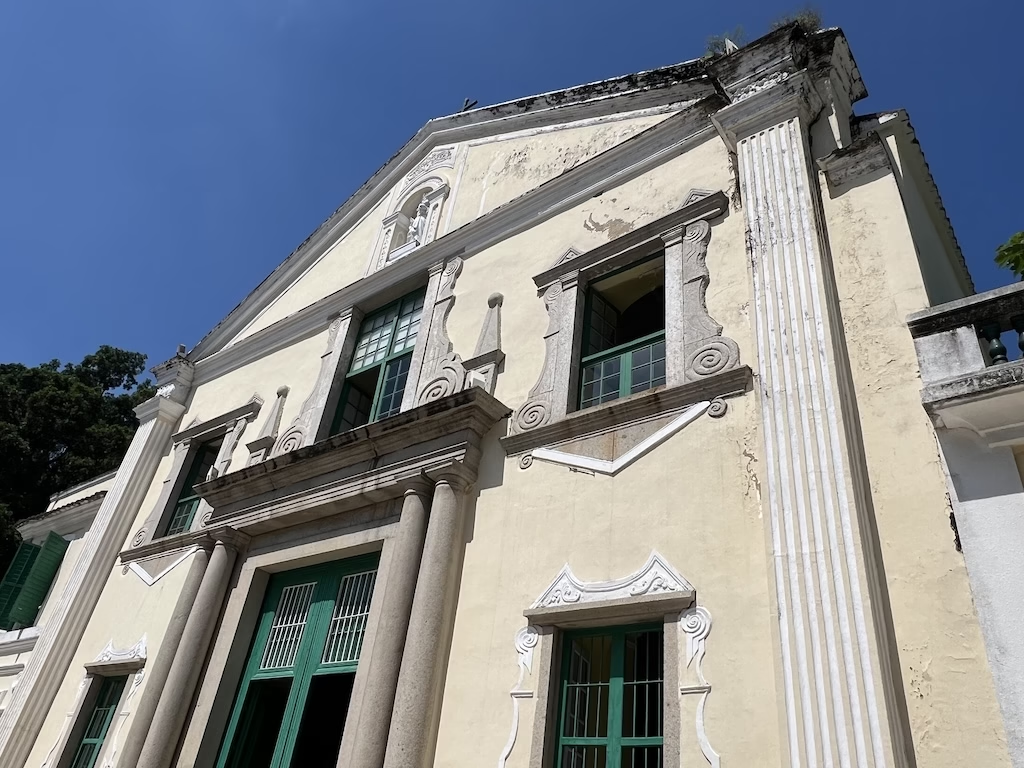
The current Augustine’s Church is a structure of 1814. At the time, the Portuguese Augustinians had long taken over the Spanish Augustinians in the administration of the mission in Macau.
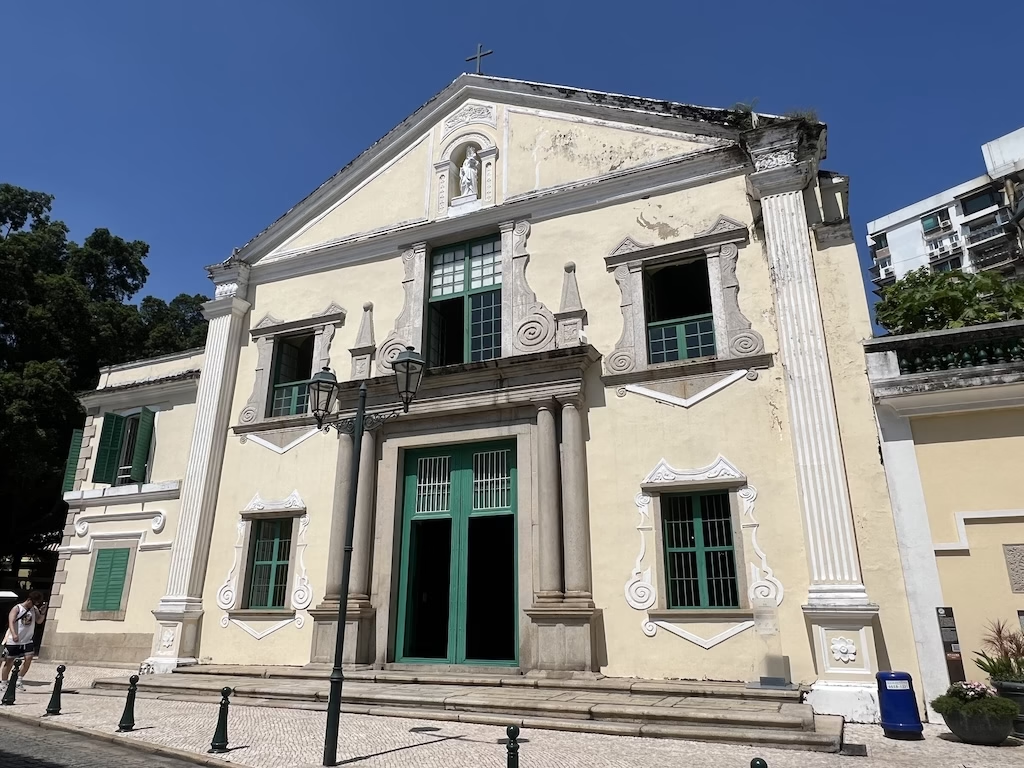
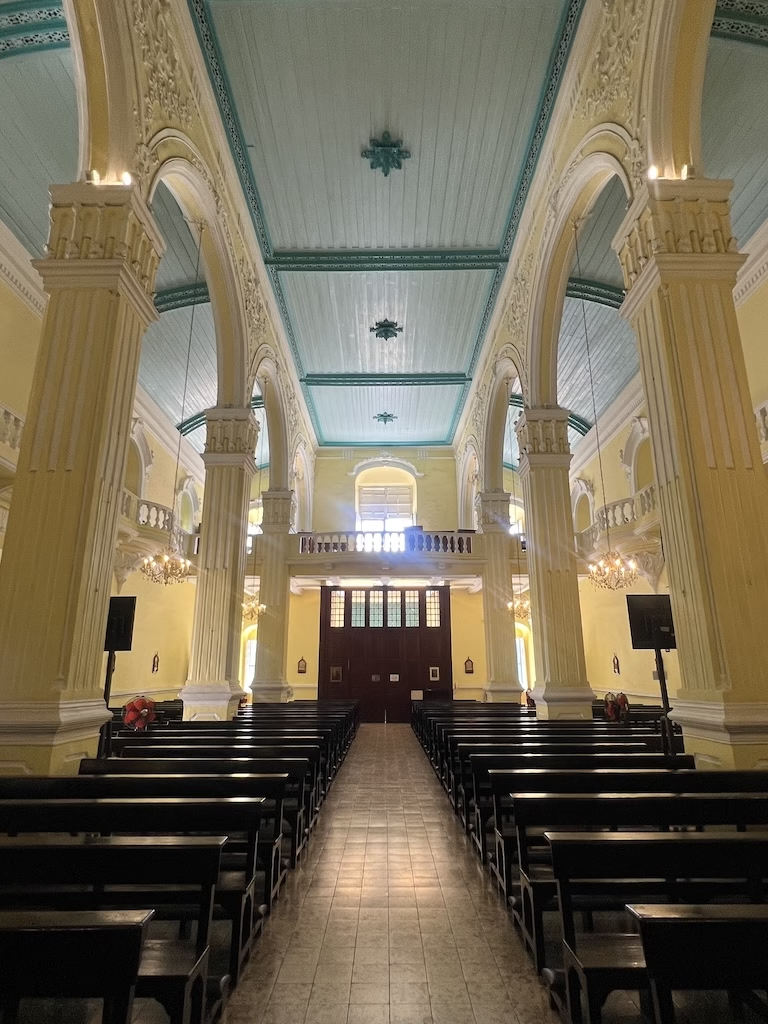
In terms of its appearance, the St. Augustine’s Church features neoclassical elements of architecture, with just a tiled and gabled roof, no dome, and one tower. Overall, its style reflects the spirit of the Renaissance. Its façade features prominently two pairs of Doric granite columns with a triangular pediment at the top. Its interior is designed in the basilica style. The beauty of the St. Augustine’s Church is in the simplicity itself, its chief significance being of historic, cultural and ecclesiastical in nature.
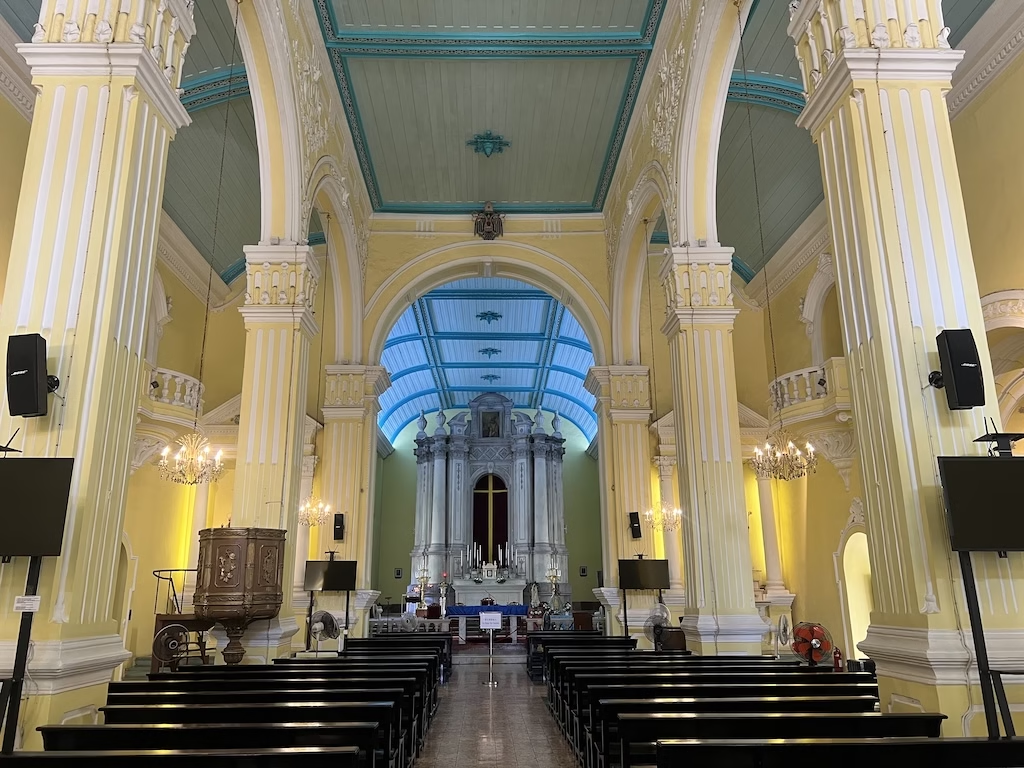
The St. Augustine’s Church is most known for two aspects of historical significance. Firstly, it was the first English mass held in Macau. Still, today, the St. Augustine Church offers masses in Portuguese, English, Cantonese and Tagalog.
Secondly, it organizes a two-day procession “Way of the Cross,” one symbol of which is “Jesus on the Cross” as brought from the St. Augustine’s Church to the Cathedral of Macau (and returned) during Lent.
Sources
Descriptions on site at the St. Augustine’s Church.
Augnet, 4847 Macau.
Macaotourism.gov, St. Augustine’s Church.
Macau World Heritage, St. Augustine’s Church.
Michael Hugo-Brunt, The Church and Former Monastery of St. Augustine, 19 J. of the Society of Architectural Historians 69 (1960).
Visit Our China, St. Augustine’s – Macau’s First Church for English Mass.