
Historic Macau — The History of the Jesuits in Macau and the St. Lawrence’s Church
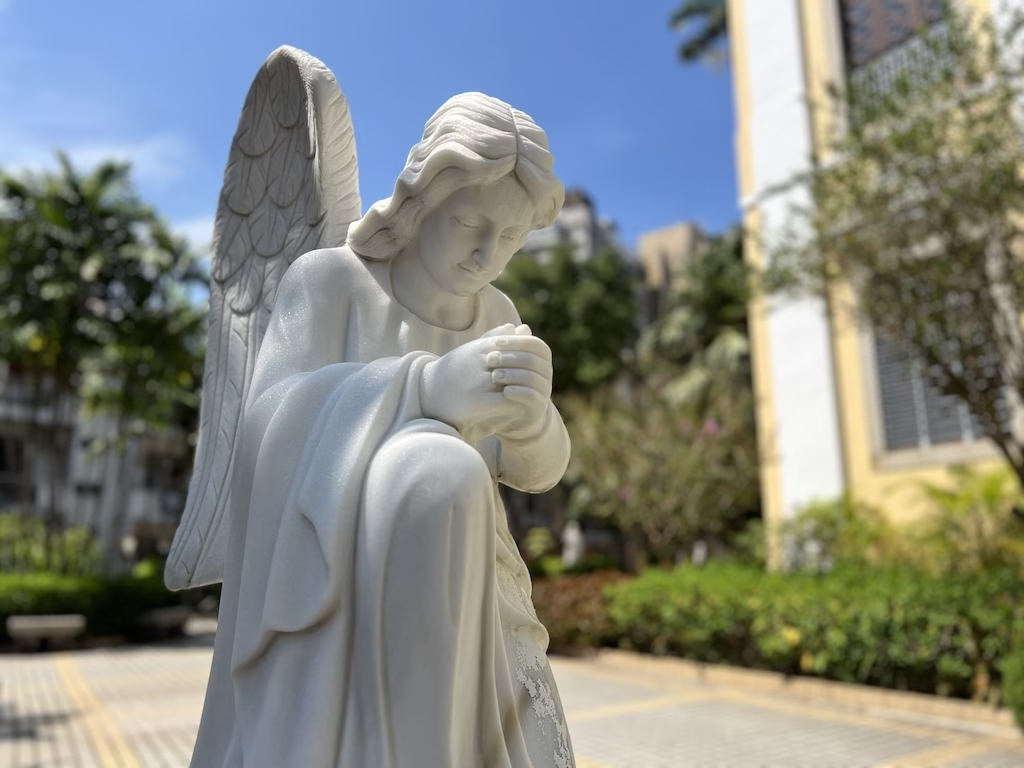
A historic tour of Macau would not be complete without learning about the heritage of the Christian faith in this small city. Perhaps it is fortunate that with the ills of western colonialism also came the light of the Christian faith.
Different catholic orders have had a strong presence in Macau. The Jesuits, Dominicans, Franciscans and the Augustinians had notable influence in bringing the Christian faith into China via Macau. From cathedrals to schools, from charity to battles, the Catholic missionaries have been the spirit and sinew in Macau’s development.
The Jesuits in Macau
From amongst the different orders of missionaries, the Jesuits were the most prominent because of its earliest arrival in Macau. Fathers Luís Fróis and Giovanni Battista Del Monte arrived in Macau in 1562 as the first Jesuits to set up residence and ministry in Macau. When fathers Francisco Peres, Manuel Teixeira and André Pinto arrived in 1563, Fathers Fróis and Del Monte moved on to their posts in Japan.
At the end of 1565, the Jesuit began building their first permanent residence and chapel in Macau. The first bishop was the Portuguese Melchior Carneiro, who set up a sanatorium for leprosy. The first school in Macau was also started by the Jesuits in 1572.
In response to the emerging persecution of missionaries in Nagasaki, the Jesuits decided to set up a college at St. Paul’s to give home to Japanese students in the faith. The very first St. Paul’s cathedral (The Church of the Mother of God), was thus known conterminously as St. Paul’s college. The college was, properly considered, an institute of higher learning with didactics in theology as well as mathematics.
This cathedral would be destroyed by fire, and what has been rebuilt thereafter, between 1602 and 1634, would eventually be destroyed by fire as well. The façade of the 18th century structure would become the Ruins of St. Paul’s (Ruínas de São Paulo), to which all visitors to Macau pay homage.
Like the Japanese, the Chinese also persecuted the missionaries. In 1617, Peking acted on its historic ill will against Christianity. The missionaries that were expelled from China found refuge in Macau, especially in the College of St. Paul. Macau was the womb, the cradle and rite of passage for missions in China and Japan.
Historically, the most significant setback to the Jesuit Order was the suppression of the Society of Jesus in 1579 as ordered by the Marquis of Pombal. This development resulted in the expulsion of the Jesuits from western Europe and all the colonies in the world under the dominion of those European countries. This edict became effective in Macau in 1762, resulting in the closing of the College of St. Paul, as well as the Jesuit residency. At this point, 463 Jesuits had arrived in Macau, fulfilling the various purposes to which they were called.
The Jesuits would be restored in Macau in 1890 at the behest of the bishop of the diocese at that time. Yet in 1910, they were expulsed again from Macau due to the tension in the Holy See. They moved their base to Zhaoqing then. In 1913, the Portuguese authorities allowed them to return to Macau, but only on the condition that they worked in the Chinese part of the diocese in Macau.
The St. Lawrence’s Church
I wandered off from the Mandarin’s House and found my way through the uneven grids consisting of narrow streets that sprawled the hearts of the residential and the faithful in Macau. Soon, I arrived at the St. Lawrence’s Church.
Its name Igreja São Lourenço in Portuguese, the St. Lawrence’s Church is one of the earliest churches set up by the Portuguese in Macau. Its original building stood as early as 1560, as a simple wooden structure. This was certainly very soon upon the official founding of Macau in 1557.
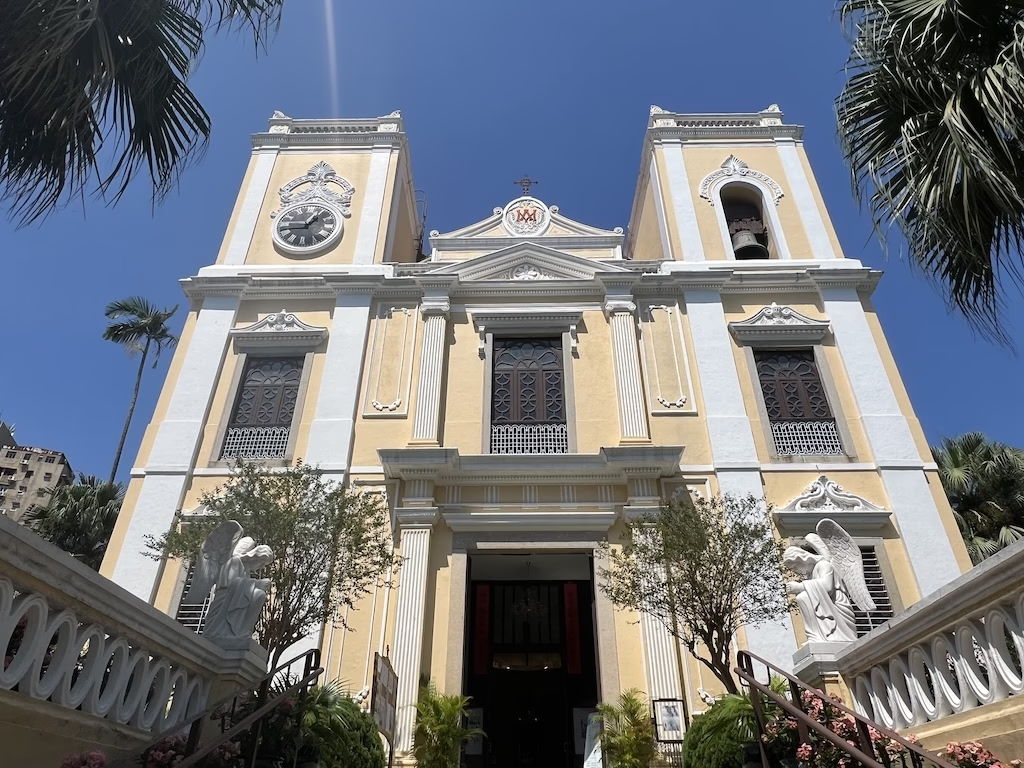
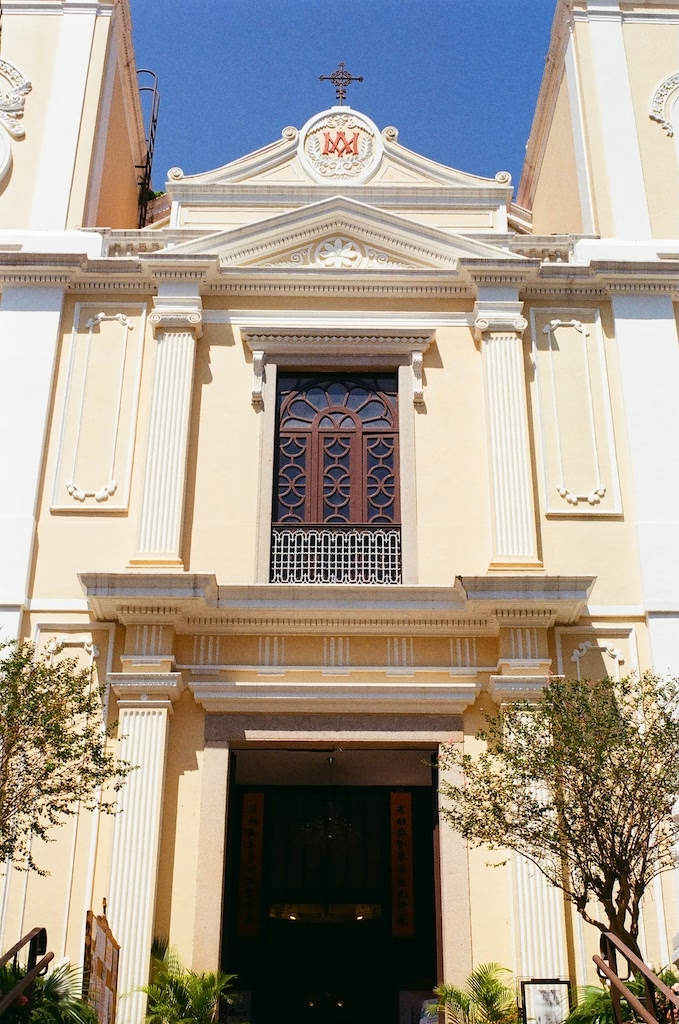
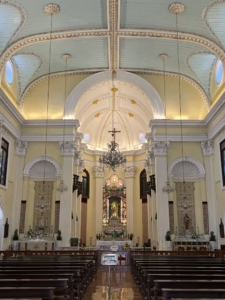
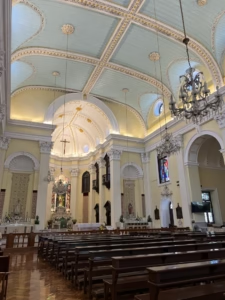
The current structure is that of 1846, featuring neoclassical architecture in a light, heavenly yellow color that glows gently under the rays of late October. The nave is flanked by two bell towers. The St. Lawrence’s parish had existed as early as the times of the first Jesuit Bishop Melchior Carneiro, as one of the poor parishes in the neighborhood, with three poorly put together churches as the gravitational foci of faith and charity in the earliest beginning of Macau.
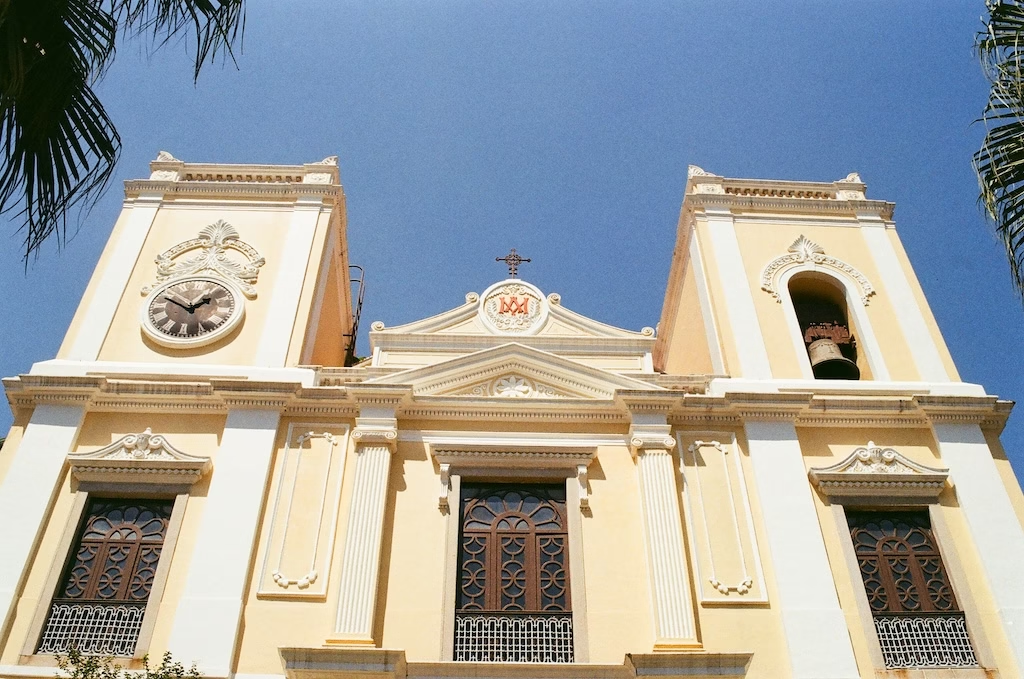
St. Lawrence is the patron saint for navigation. Before the establishment of the Nam Van Lake, this church overlooked the shore in this part of Macau. The family members of the Portuguese seamen would pray here for the safety of their beloved, as well as watching the approaching vessels moor to the safety of home.
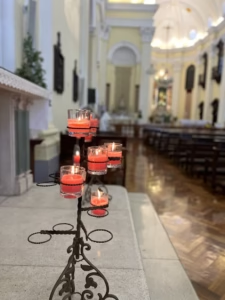
Despite its humble beginning, the St. Lawrence’s Church, as rebuilt during the 19th century, is considered a significant church now. A local architect of Portuguese lineage designed this current church building, it is meant to be grand, as shown in its overall architecture, holy fixtures and interior attributes. Perhaps the photographs will speak volumes here:
Sources
Descriptions on site at the St. Lawrence’s Church.
Macau Travel Hub, St. Lawrence’s Church.
Yves Camus, s.j., Macao Ricci Institute, Macao and the Jesuits: A Reading through the Prism of History.