
Historic Macau — Portuguese Asia (4)
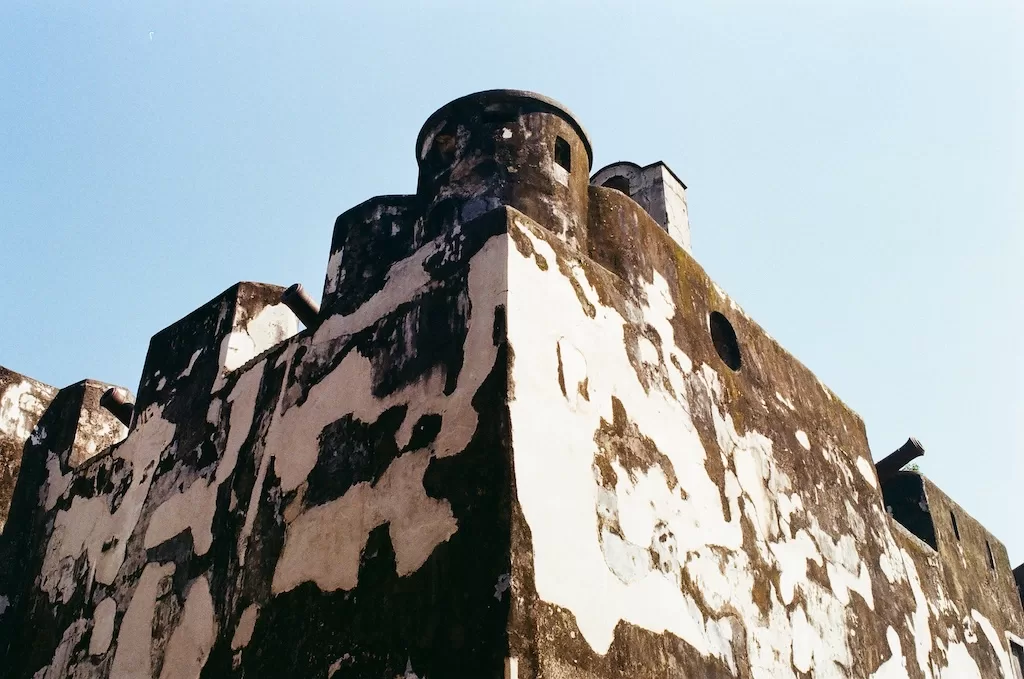
Since I would like to study the heritage of Macau, I figured that a good book on Macau’s history, which is probably not widely known, is in the order. I found an exceedingly pleasant book called A Macao Narrative by Austin Coates in the library. In the last three and this entry, I summarize the key points that I took from his book as an overall introduction of Macau’s fascinating history.
In Portuguese Asia (1), I said that Macau’s experience as a colony was oddly pacific. There were simply no wars or atrocities that gave rise to its status as a colony. But the formalization of the Portuguese sovereignty over Macau was a result of a buildup of significant events. These events led to a decisive battle raged at the Chinese at Pak Shan Lan, a sagacious turn for Macau’s status as a Portuguese colony.
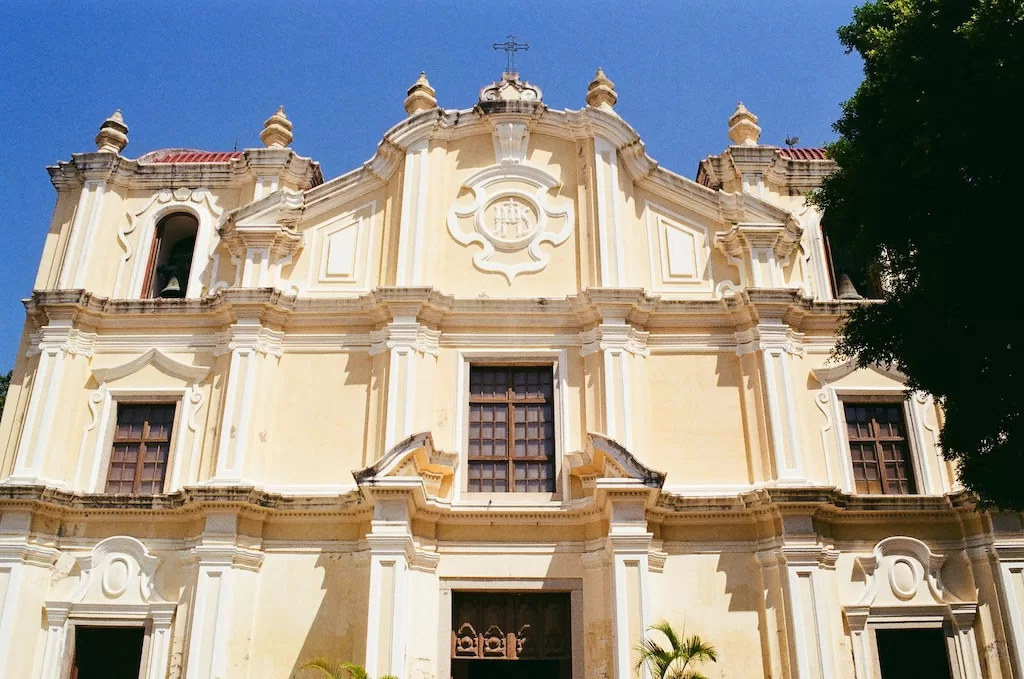
On the Issue of Portuguese Sovereignty in Macau
For centuries, the Chinese engaged in an approach on Macau that was somewhat akin to a carrot and stick policy.
Since Macau’s founding in 1557, the Portuguese had gained their legal rights to reside in Macau. As they were enriched by the Japan trade, they entrusted all the relatively menial tasks to the Chinese. From shipbuilding to food and agriculture, the Portuguese relied on Chinese labor for even the most basic aspects of living.
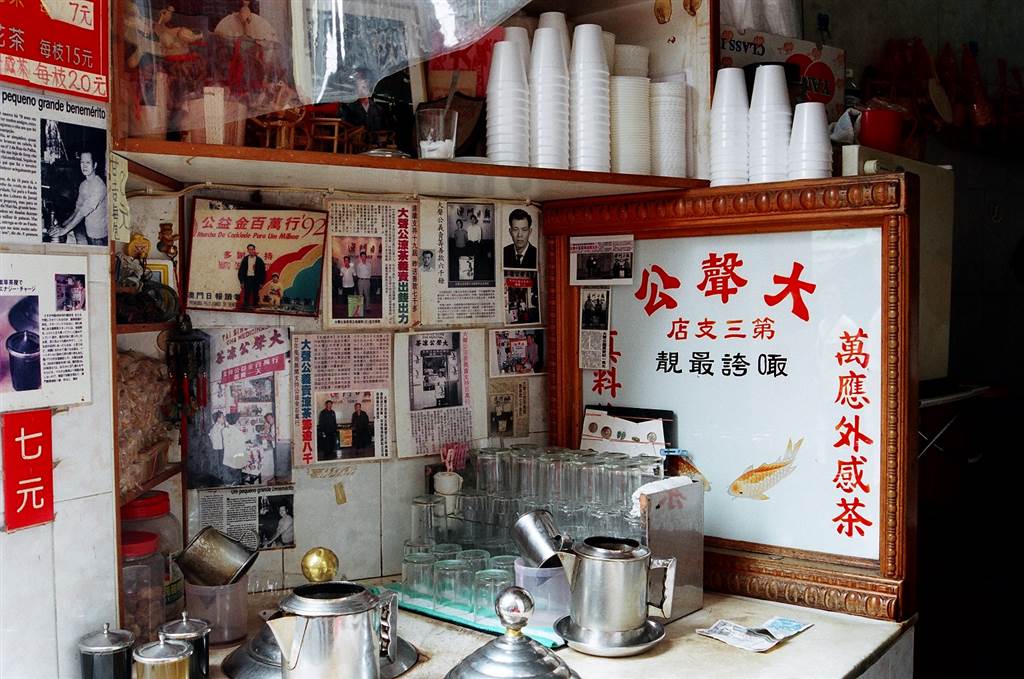
In the beginning, the Chinese had to get all their work done in the day. Then at night they all had to return to Canton through the barrier point, which served as a marker for a rough boundary between Canton and Macau. Eventually, however, the Chinese community did settle down between Macau’s city walls and the barrier point to Canton.
The carrot in the Chinese policy on Macau was the right for the Portuguese to conduct their trade undisrupted. The stick came in the various demands to which the Chinese authorities felt entitled, including the charging of customs by running customs posts, the charging of ground rent, and the ability to “call all the Chinese workers back to Canton” at their whim. On a day-to-day basis, it was the Chinese watch force that maintained law and order in Macau.
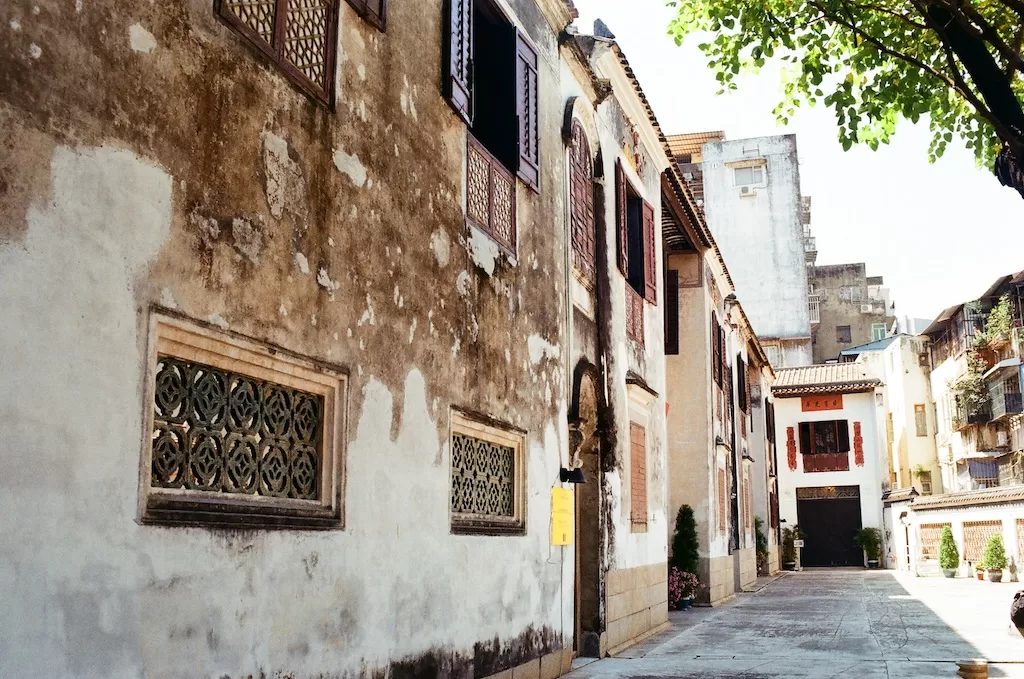
For centuries, neither the Chinese nor the Portuguese had any doubts about their respective sovereignty over Macau. When the British successfully wrestled with the Chinese to secure the Treaty of Nanking, which ceded Hong Kong in 1840, the Portuguese sensed the urgency to formalize their claim of sovereignty over Macau.
The Assassination of Governor Captain Amaral in 1849
The prelude to the Portuguese’s act to assert its sovereignty over Macau was the gruesome assassination of the one-armed Governor Captain João Maria Ferreira do Amaral by the Chinese in 1849. As the Portuguese crown tasked him with the assertion of Portuguese sovereignty over Macau, Governor Captain Amaral introduced a number of tough measures that angered both the Senate and the Chinese residents of Macau.
One example was the suggestion of clearing out the shacks of the Chinese that lied between the city walls and the barrier gate to Canton. He knew it would agitate the Chinese because such measure would result in moving the graves in that area. In a series of other events leading up to the 1849 closure of the main Chinese customs office in Macau, Governor Captain Amaral effectively imposed martial law in Macau that year.
The Chinese attackers of Amaral beheaded him and took the head and his only arm as their ransom to claim the rewards as promised by the Chinese government. The Macanese were horrified, as this was clearly the Chinese government’s act of terror against Macau. The Macanese were quite ready to strike back. Meanwhile, Chinese forces were gathering around the fort of Pak Shan Lan, a bit farther into Canton than the barrier point.
The Pak Shan Lan Battle of 1849 (Battle of Passaleão)
Lieutenant Vicente Nicolau de Mesquita was the very hero that would take the offensive against China. With a small troop of 16 men, Lieutenant Mesquita took with him the only howitzer of Macau and approached the Fort of Pak Shan Lan. The Chinese troops were shooting at them as they approached. Like Father Rho in the Battle of Macau during the Dutch invasion, Mesquita fired just one critical shot from the howitzer and hit the center of the fort. This effectively demoralized the Chinese forces there.
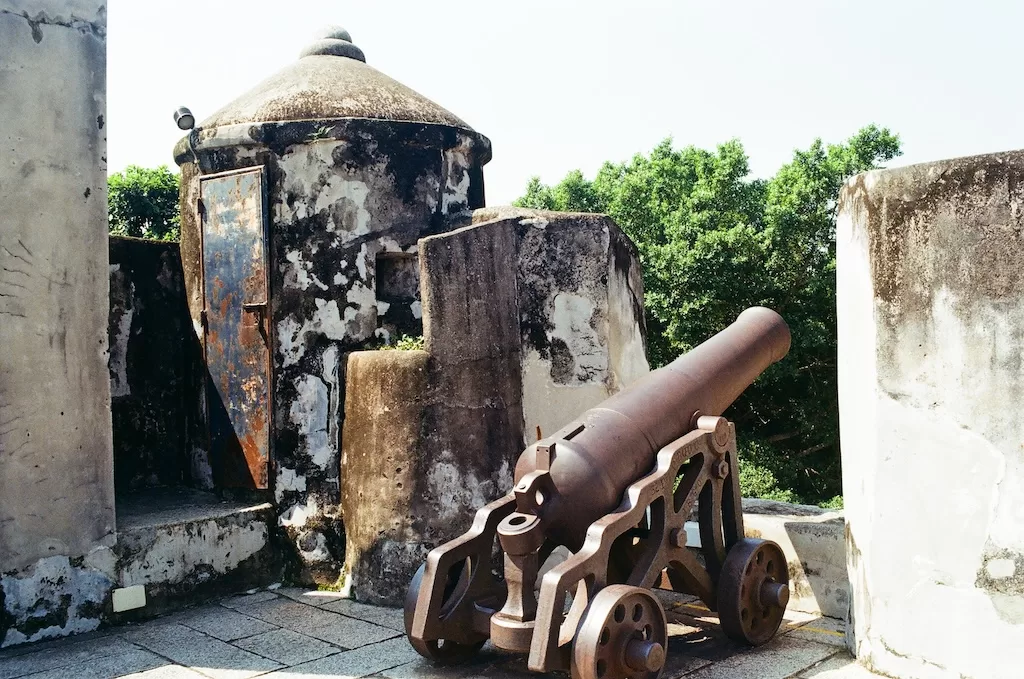
Mesquita went back to the Macau side and asked for reinforcement. With 36 men he advanced again, through the rice fields. The whole maneuver was a spectacle for all sides involved. The foreign representatives lined up the monte fort to watch as Mesquita led the charge. 2,000 local Chinese, in addition to those who were already at the Pak Shan Lan fort, were also witnessing the battle from the Chinese side.
As the procession were firing at the fort, they took down Chinese soldiers, and miraculously had not lost one man. By the time they reached the fort, the whole garrison of Chinese soldiers fled. In an act of symbolism, the troop severed the head and the arm of a Chinese officer at the fort, in revenge of Governor Captain Amaral’s gruesome death. They then blew up the fort in a fantastic show of victory.
With this decisive victory at Pak Shan Lan, the foreign troops, including the British, American, Spanish and French troops and warships, came around to support Portugal’s defense of Macau, including fortifying various defensive positions. The Portuguese assumed de facto sovereignty over Macau. What remained to be done was to reach formal agreements with Peking.
The Sino Portuguese Treaty
In 1862, Governor Captain Isidoro Francisco Guimarãres (1851-1863) traveled to Tientsin (Tianjin) to conclude the Sino-Portuguese Treaty with the Chinese, in hopes to formalize Macau as a Portuguese colony. Two years later, his successor Governor José Rodrigues Cohelho do Amaral (1863-6) wished to bring together the ratified treaty. But the Chinese tried to introduce modifications. To this, Governor Amaral declined. Thus, the Sino-Portuguese Treaty never took effect properly.
When Governor Amaral succeeded Governor Guimarãres, he improved the cityscape of Macau significantly. Meanwhile, France at the heyday of its colonial power was edging to become the greatest foreign presence in China. The British did not wish for France to rise. After the Second Sino-British War, Sir Robert Hart took up the role as the representative of the Chinese Customs. He attempted to control the import of opium into China. He was making an agreement with Hong Kong to adopt control measures similar to those in force in the Treaty Ports.
Hong Kong agreed to cooperate only if Macau would accede to the same terms. Otherwise, Macau would have an incredible advantage in the opium trade. Owing to this delicate situation, Macau’s status as a Portuguese colony was formalized. Sir Robert Hart drew up a protocol, which provided for China to conclude a treaty of amity and commerce with Portugal, as China has done so with other European nations. It was also by this treaty that China would confirm “the perpetual occupation and government of Macao and its dependencies by Portugal, as any other Portuguese possession.” Macao would then control the opium trade on the same terms as Hong Kong’s. To benefit the British (as against the rise of France), Portugal should undertake “never to alienate Macao and its dependencies without agreement with China.”
The treaty was signed in Tientsin in 1887 and ratified in 1888. Fast forward to 1974, the Portuguese revolution resulted in Portugal divesting all of its colonies. But again, Macau stood at this historical juncture as an anomaly. New China, at that point, wished for Macau to remained as it was. Portuguese troops were withdrawn anyway, and Macau reverted to the state of affairs like its very earliest times – an undefended territory in China where a mix of European, Asian and Macanese lived and did business.
How Macau Arose as the Gambling Hubs of Asia and the World
Macau’s gambling establishments were set up under the administration of Governor Guimarãres. He was the only successive governor of Macau after Governor Captain Amaral that managed to do anything of significance in the 1850s. In his tenure he concluded the Sino-Portuguese treaty, as well as setting up legal gambling as a business venture for Macau.
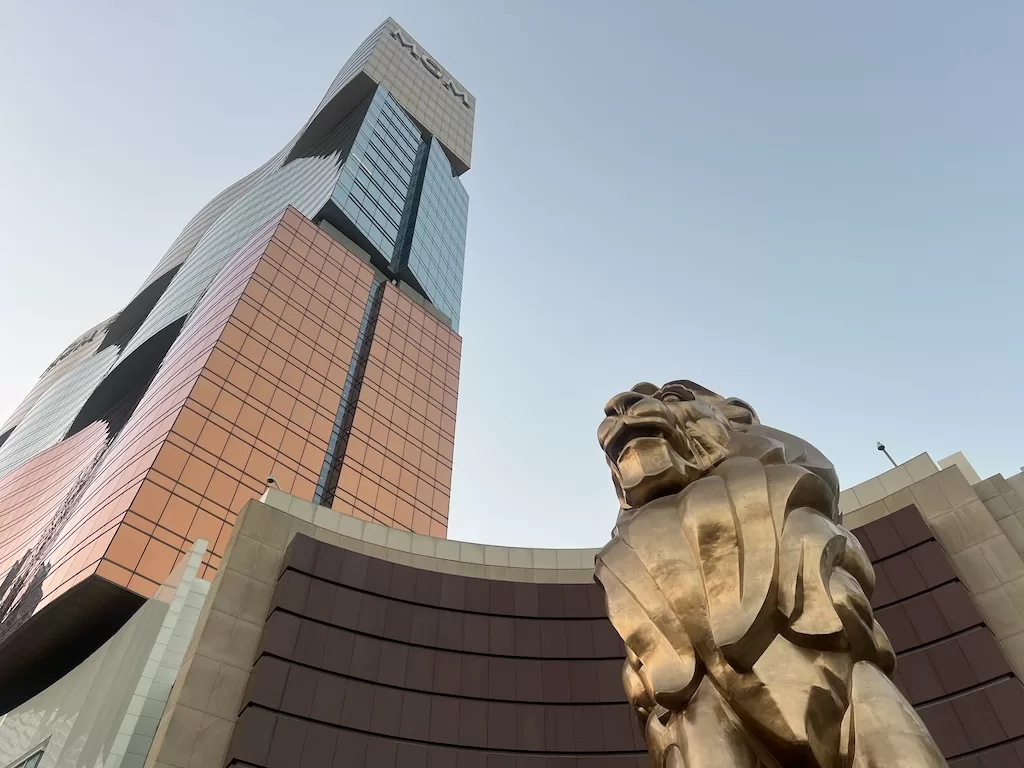
Originally, his intention of setting up licensed gambling establishments in Macau was to bring in the revenue required to administer other Portuguese colonies in the region – by then, only Portuguese Timor was left. The gambling dens were replaced by licensed operators, with immense initial success in serving their purpose.
Surprisingly, the gambling setup managed to put the city in order. When there was a wanted criminal, the small Macau police force simply approached the gambling “farmer’s” organization. Nobody could hide in the dark from the similarly dark force of the city.
As such, Macau rose again as the Monte Carlo of Asia, at some point even more glamorous than Las Vegas.
Source
Austin Coates, A Macao Narrative (1978, 2009)