
Historic Macau — Portuguese Asia (1)
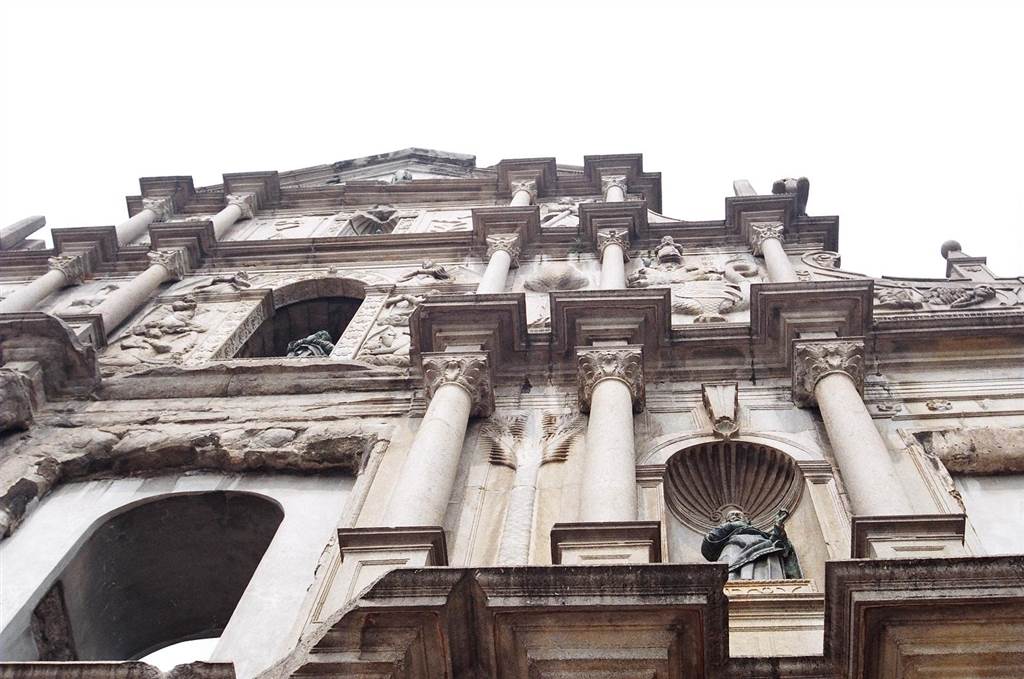
Since I would like to study the heritage of Macau, I figured that a good book on Macau’s history, which is probably not widely known, is in the order. I found an exceedingly pleasant book called A Macao Narrative by Austin Coates in the library. In this and the next three entries, I will summarize the key points that I took from his book as an overall introduction of Macau’s fascinating history.
A Macao Narrative is a short book, consisting of only 140 pages. One can finish reading it comfortably in one or two days and I highly recommend reading it for general knowledge.
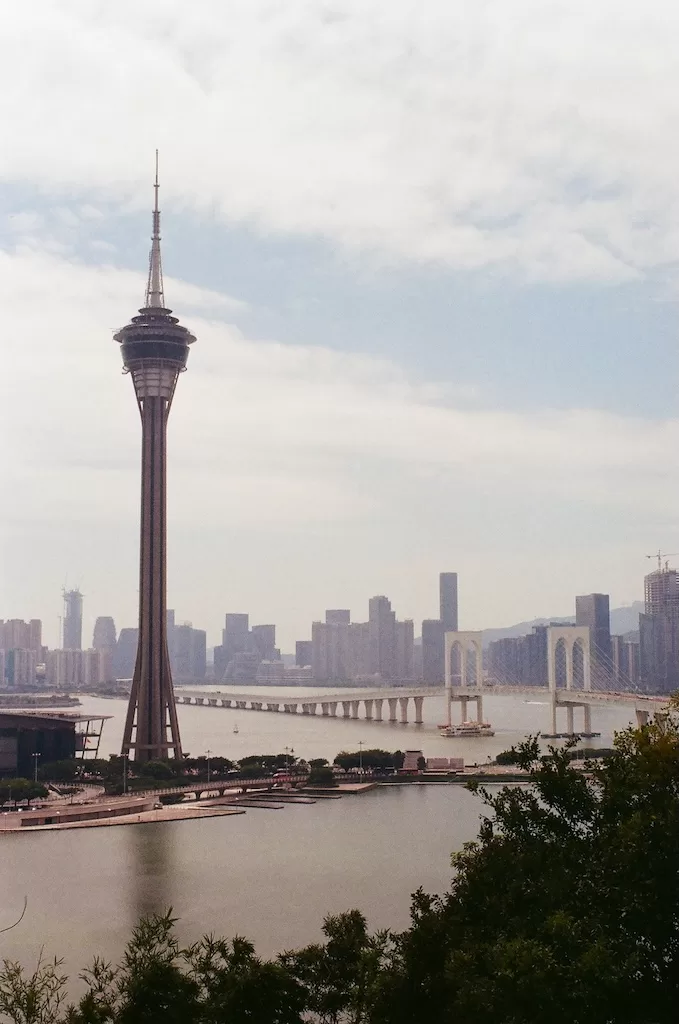
Macau — Whence Comes Its Name?
Few people know how Macau came to be known as Macau as its English name, because it is nothing like its Chinese name, which is pronounced Ao-men.
One might assume, quite naturally, that the name Macau must have borne some Portuguese influences. As it turned out, it is actually a transliteration of a Chinese reference to the region when it was simply a windswept peninsula at the Pearl River estuary, waiting to be discovered.

The “Ma” in Macau refers to Ma Cho, the temple of which (A-Ma Temple) was one of the only two things the Portuguese saw when they first set foot in Macau. The other one was a farmers’ temple, called Mong Ha Kwan Yin Temple. Traditionally, the coastal peoples of China, who were mostly seafarers, worshipped Ma Cho (the Ancestral Grandmother) for their safety at sea.
Because the early Macanese fishermen were of the Fukienese heritage, their way of addressing Macau became the name of Macau. They called Macau “Amakao” (the creek of Ma Cho, “kau” meaning a ravine). Therefore, Macau came to be known as Macau.
Macau Versus Hong Kong – Two Former Colonies Juxtaposed
Macao, a sturdy orphan and a very rich one, was an anomaly from the start, a colony without a governor. ~Austin Coates at 33
To understand Macau only as a former colony of Portugal in China would have reduced the complexity of Macau’s long history into simplistic worldviews that do not do justice to its unique and exclusively European roots. Macau’s founding as a significant, somewhat-independent outpost of Portuguese Asia in China arose out of a centuries-long development of events. They are interwoven with fortunes, misfortunes, careful official maneuvers and the serendipity of collective actions taken by mercantile opportunists. As a city, it was founded by the Portuguese exclusively.
Paradoxically, if one is to understand Hong Kong only from the angle of being a former British colony in China, it is considered standard history and not a simplistic view. The colonial history of Hong Kong arose out of dramatic failures in trade relations and diplomacy that resulted in intentional wars waged against China and lost by it, but it was straightforward enough as the textbook denunciation of colonialism.
While both Macau and Hong Kong owe their success to the colonial powers of the day, the historical backdrop of their respective colonialism is the difference between the two poles of the earth. For the Portuguese was the very first European power to experiment with trade routes out to the Far East (yes, even before the Spaniards) beyond India in the early 16th century. Great Britain’s trade and imperialist ambitions, on the other hand, came about a century after.
As viewed in the totality of their acts of assertion, Great Britain’s sovereignty over Hong Kong was formal, legal and ceremonial. In contrast, the Portuguese sovereignty over Macau took a few surprising and sagacious turns after about three centuries of ambivalent policies between the Portuguese and Chinese authorities.
That is not to deny the fact that Macau was a Portuguese colony. The point is just that its colonialism developed in an unusual historical course even as a settlement colony. It was oddly pacific as a matter of colonialism, as opposed to that of Hong Kong’s — or anywhere else in the world, including other Portuguese colonies.
Before the Founding of Macau
The Portuguese’s attempt at exploring the trade route in the Far East goes back to the times of the Ming dynasty in China, during the Wuzong reign. The Portuguese envoy Tomé Pires established preliminary contact with then Emperor Wuzong, and he received a rather warm welcome. Wuzong tended to agree with the views of his eunuchs, who were particularly open to foreign influences and trade. Yet, before the two parties sat down for formal talks in Peking, Wuzong died and Shizong ascended the throne in 1522. Shizong, in his early years as the emperor, adopted isolationist policies as advocated by the mandarins. The door for the Portuguese to secure proper trading rights in this part of the world was closed. In fact, China became so isolationist that no trade could be conducted even with the overseas Chinese.
Yet, the lucrativeness of the Japan trade meant that the Portuguese must press on, even with illicit trading. The fact that all Chinese ships, which at the time represented the most advanced of naval power, were called off the high seas had resulted in the proliferation of piracy. This opened up the unlikely historic opportunity for the Portuguese to rise to the occasion.
The Founding of Macau
It was due to serendipity that the Portuguese were able to establish a formal footing in Macao. In securing a route to engage in an immensely profitable trade with Japan, the Portuguese, with its advanced ships armed with defensive capabilities, managed to stall off the pirates in the area. A few of its decisive victories against the pirates were recorded in the local and national records in China.

In light of this development, the Chinese authorities embraced the Portuguese as “useful friends.” Their residency in Macau was officially permitted by the Chinese. The Chinese thought that the Portuguese, as non-tribute paying foreigners, could be used to play off the “other barbarians,” such as the Japanese and the pirates. At the very least, the Macanese paid their taxes to the Chinese government dutifully.
In 1557, Macau was founded as the Portuguese successfully established a footing in the Pearl River after decades of failed attempts to do so. The Macau settlers did not seek the approval from Goa, which was the first Portuguese colonial settlement (with established governance) in Asia. For a long time, Goa was simply not informed of the illicit Japanese trade.
Unlike the mat sheds of the Portuguese’s former settlements in China, Macau became a permanent settlement with proper, European-styled built structures. A city sprang up to fame, as a result.

Macau’s Golden Era as the Portuguese Entrepot
When the Portuguese founded Macau, what it managed to do was to normalize (and, for a long time, monopolize) the profitable trade route with Japan. To the extent that the trade was welcomed also by the Japanese government, which, at that point, had not harbored ill will against the western powers, Nagasaki became the preeminent community of Portuguese traders. The trade brought enormous prosperity to Macau for almost a century, and the route is consisted of the Malacca-Macau-Japan axis. At that time, the Japanese had heavy demand for Chinese silk and porcelain. They paid for the shipments with silver. Macau’s location is the perfect midpoint for sheltering and replenishing between Malacca and Japan. It also has strategic significance being at the doorstep to Canton.
This profitable trade went roughly like this:
At Macao, the principal cargo for Japan was loaded: Chinese silk, raw and prepared… Bric-á-Brac sold well in Japan; so did firearms, daggers, Persian carpets, battle pictures… Staple imports included Indian cotton, spices, and European wines.
The Portugues ships returned from Nagasaki, after their tremendous sales… This treasure could in its turn be sold on the fluctuating silver market of Canton, to even further advantage. With it, Macao merchants bought Chinese goods for delivery westward to India and Europe. ~Austin Coates at 50

The golden era of Portuguese Macau would span roughly between Macau’s founding in 1557 and the fall of Portuguese Malacca in 1641.
Unlike the two established colonies of Portuguese Asia, Goa and Malacca, Macau established itself with a hankering for independence in running its own economic and administrative affairs. When it began its first chapter, Macau did not have a governor as a traditional colony would. It was run by the Captains-Major and the Senate instead. In many instances, the Captains-Major as often appointed by Goa clashed with the Senate, which consisted of the principal leaders and elders in the trade business. In so many ways, Macau did not feel obliged to Goa, and in fact neither to China — the relationship was cautiously pragmatic, with the Chinese exercising a carrot-and-stick approach, for most of the 16th and 17th centuries.

Source
Austin Coates, A Macao Narrative (1978, 2009)
The Wikipedia on Governor of Macau.